 Article
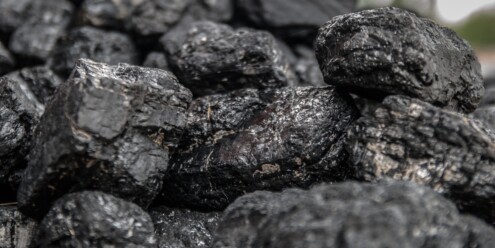
Can U.S. coal survive in the ESG era?
Amid the global shift away from coal-fired power, the coal industry is attempting to find its place in a new ESG-focused world.





 Article
Amid the global shift away from coal-fired power, the coal industry is attempting to find its place in a new ESG-focused world.

 Videos
Uday Turaga, CEO of ADI Chemical Market Resources, sat down for a fireside chat with David Hatrick, VP of Innovation at Huntsman, during FlexPO+ 2022 (now incorporated into the ADI Forum)—ADI Chemical Market Resources’s annual plastics and polymers conference. How did a physics major end up shaping the future of the chemical industry? In this […]
 Article
Eagle Ford natural gas production is increasing, but what is driving the growth? Also, a look at what top operators are doing to reduce GHG emissions.
 Article
With carbon capture becoming more prevalent in today’s world, CO2 conversion is becoming one of the popular utilization methods for the captured emissions.
 Article
Given the IMO’s ambitious goals to halve the shipping industry’s 2050 GHG emissions from 2008 GHG emission levels, shipowners and ship engine manufacturers must carefully consider a broader range of marine fuels for the world’s future fleet, such as ammonia and methanol.
 Article
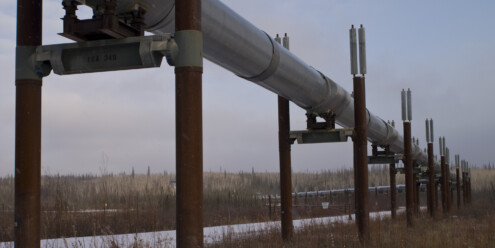
Since 2019, midstream companies have been lowering their capital spending annually. For example, Kinder Morgan expects to spend roughly $390 million less in capex in 2022 than they did in 2019, as seen in Exhibit 1. This trend for companies in the industry is due to a multitude of factors which were covered in depth […]
 Article
Companies are buying carbon offsets to become “net-zero.” What are the risks and challenges with carbon offsets and do they mitigate climate change?
 Article
Growing ESG pressure from investors, rise in public awareness towards climate change, and countries setting ambitious net-zero emission targets have motivated upstream operators to invest in technologies that can reduce their carbon footprint. What are the operators doing to reduce flaring?
 Article
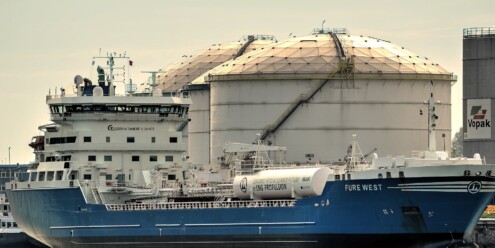
ADI Analytics along with the U.S. Energy Association and Gas Technology Institute explored the opportunities for U.S.-based small-scale liquefied natural gas (LNG) in Central and Eastern Europe for the U.S. Department of Energy in 2020. While decarbonization, energy security, and supply diversification were identified as the key drivers of U.S.-based small-scale LNG adoption in the […]

 ADI Forum
Cheniere Energy’s SVP Christopher Smith opened the 2022 ADI Forum, which included 6 panels and over 25 speakers from Devon Energy, BP, Phillips 66, NextDecade, Huntsman, and Surge Energy. The agenda focused on upstream and midstream oil and gas, LNG, hydrogen, fuels, and innovation, with a strong emphasis on navigating the energy transition. FlexPO+ featured […]
 Videos
Since 2017, the ADI Forum had been a vital event for oil and gas professionals seeking networking opportunities and fresh perspectives. Featuring insights from leaders such as Fabio Ribeiro, Director at CISTAR; Terry Shidner, Enterprise Account Executive at AlphaSense; Reinaldo Bermudez, Executive Director of Turbomachinery Sales at MAN Energy Solutions; Vincent Follaca, Senior Business Development […]
 Videos
The 2022 ADI Forum, ADI Analytics’ flagship oil and gas conference, featured more than 30 expert speakers and panelists who sparked engaging discussions on key strategic issues across the entire oil and gas value chain. Over 100 attendees from leading oil and gas, energy, and chemicals companies participated in the event, exchanging perspectives and industry […]
ADI Chemical Market Resources (ADI CMR) conducted a strategic study of the global tie layer resin (TLR) market, focusing on functionalized polyolefins that bond dissimilar materials in multi-layer packaging and automotive structures. The report examines evolving technologies—including new resins based on advanced Ziegler-Natta and metallocene catalysts—alongside trends in flexible and rigid packaging, compounding, and automotive […]


The midstream sector in the first half of 2026 is moving at a breakneck pace, driven by a strategic pivot toward “wellhead-to-water” natural gas liquid (NGL) integration, severe high-horsepower compression supply-chain constraints, and a massive power-generation super-cycle spurred by AI data center expansion. Rather than relying on speculative mega-projects, major pipeline operators are maximizing fee-based […]
