
High capital costs and subsurface uncertainty constrain scalable geothermal deployment despite vast resource potential and dispatchable baseload power advantages.
Operators, utilities, and investors face severe drilling cost risks and inconsistent project delivery when expanding beyond conventional geothermal geology. ADI Analytics evaluates market potential, technology and scalability, subsurface integration, and project economics to accelerate commercial growth across power generation and industrial heat.

What keeps geothermal leaders up at night
Capital intensity and drilling variability drive significant financial exposure during early project execution. Subsurface uncertainty in well depths, temperatures, and flow rates directly degrades levelized cost of electricity and project returns.
Scaling beyond traditional site-constrained regions requires adopting complex engineered systems like enhanced geothermal systems (EGS) and closed loop geothermal systems. Developers struggle to achieve consistent well productivity and control reservoir stimulation costs across non-traditional geologies.
Competitive tension increases as stakeholders navigate complex technology selection, go-to-market strategies, and evolving ecosystem partnerships.
Without reliable cost reduction and repeatable project designs, high capital risks stall market entry and restrict widespread commercial adoption.
Who we are
Geothermal advisory, built on 15+ years and 1,000+ projects. Our team supports oil and gas operators, utilities, technology developers, and investors in scaling subsurface capabilities, assessing emerging technologies, and structuring transactions.
What clients engage us to do
Assess geothermal markets and demand
ADI evaluates global market sizing, regional outlooks, and subsurface resource potential. We analyze demand across power generation, industrial heat, and emerging opportunities like lithium extraction and hydrogen production.
Leverage ADI’s industry-leading geothermal intelligence on that provides detailed market sizing, technology benchmarking, cost trajectories, and competitive landscape analysis.
Evaluate technologies and benchmark costs
We perform techno-economic evaluations across conventional, EGS, advanced geothermal systems (AGS), and emerging geothermal systems. Engagements deliver levelized cost of electricity (LCOE) modeling, cost benchmarking, and granular analysis of drilling, completions, and reservoir development drivers.
Map competitive landscapes and ecosystem strategies
We map industry developers, technology start-ups, and investors across the value chain. Engagements benchmark technical capabilities, refine market positioning, and establish strategic partnership frameworks.
Execute commercialization, investment, and growth strategies
ADI guides customer segmentation, value proposition design, and go-to-market strategies for technology providers. We provide transaction support, commercial due diligence, opportunity screening, and portfolio prioritization for strategic investors and operators.
Accelerate deployment by leveraging oil and gas capabilities
ADI’s work focuses on translating upstream oil and gas drilling, completions, and reservoir engineering into geothermal development. We identify best practices in horizontal drilling and reservoir stimulation to enhance well productivity and scalability.
Analyze project development and feasibility
We examine site characteristics, resource quality, and operational risks across exploration and development phases. Our team delivers comprehensive feasibility analyses and risk profiles to support project execution and economic viability.
Trusted by power & utilities companies around the world



For organizations seeking rapid access to market intelligence, ADI offers Future of Geothermal, a multi-client study covering emerging technologies, market outlooks, competitive landscapes, and investment opportunities.
More Industry Expertise


Related insights
 Premium content
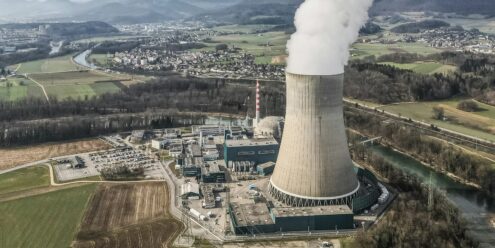
What will it take to scale geothermal?
Geothermal is attracting more attention than at any point in recent decades. Fervo’s IPO brought public-market attention to enhanced geothermal systems, and Quaise’s recent $134 million Series B first close showed continued investor appetite for superhot geothermal and millimeter-wave drilling. Developers are improving drilling performance, stimulation design, reservoir modeling, subsurface monitoring, and project execution. Oil […]
 Multi-client studies
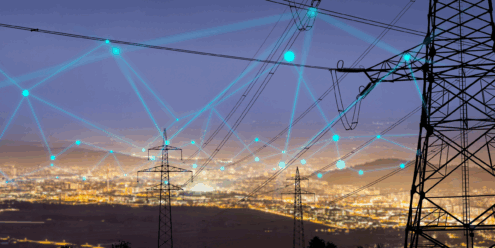
Record utility spending meets project reality
U.S. utilities are entering the largest capital deployment cycle in their history, with total spending projected to reach roughly $1.4 trillion through 2030 and annual capex growing at double-digit rates. The single biggest driver behind this surge is the rapid growth in AI and data centers. Hyperscale facilities are significantly increasing load demand, often on […]

Sign up for our newsletter
Don’t worry – we never share or sell your information.