


Recent disruptions in the Middle East—including the closure of the Strait of Hormuz and the shutdown of Shell’s Pearl GTL facility in Qatar—have significantly tightened global supplies of Group III and Group III+ base oils, the primary feedstocks used in synthetic lubricants. At the same time, substantial capacity additions from LAO producers in Asia and the Middle East have pushed several LAO segments into oversupply. Together, these developments highlight a key reality facing the industry: global capacity alone does not guarantee supply security. Based on ADI Analytics’ ongoing research, five themes are shaping the future of the global LAO market.
1. Supply chain resilience is becoming as important as capacity
Geopolitical volatility and regional trade bottlenecks are fundamentally altering petrochemical supply chain strategies. Because the United States relies heavily on imports from the Persian Gulf and South Korea for Group III and Group III+ base oils, recent disruptions have created a severe supply squeeze that is expected to persist through 2027.
As lubricant blenders, automotive OEMs, and aftermarket suppliers compete for limited volumes, U.S. oil and gas operators are also facing elevated costs and supply risks for heavy-duty engine oils used in rigs, compressors, pumps, and fleet vehicles. For oilfield chemical producers, many of which depend on global petrochemical and lubricant supply chains, these developments underscore the growing importance of supply diversification and resilience.
Even in markets where global capacity appears ample, disruptions in critical feedstocks can quickly ripple through downstream value chains and alter purchasing patterns, pricing, and competitive dynamics. Supply chain resilience is becoming a strategic priority, and geopolitical disruptions and logistical constraints continue to encourage more localized production and consumption models.
2. Polyethylene remains the dominant demand engine for LAOs
Polyethylene remains the primary demand driver, accounting for approximately 67% of global LAO consumption. C4 (1-butene), C6 (1-hexene), and C8 (1-octene) are critical co-monomers for LLDPE and HDPE production and continue to represent the strongest source of demand growth in the industry.
Demand varies considerably by carbon chain length. Short-chain LAOs (C4–C8) remain the largest and most important segment because of their role in polyethylene production. The United States remains the largest LAO consumer, accounting for 36% of global demand, followed by Northeast Asia at 21% and Western Europe at 15%. ADI Analytics has tracked these markets for more than a decade through its dedicated assessment of C4-C8 alpha olefins used in polyethylene production. The study examines co-monomer demand, supply dynamics, and competitive developments across the global polyethylene value chain. Mid-range LAOs benefit from demand in detergent alcohol and surfactant applications, while higher-chain LAOs serve more specialized lubricant and performance chemical markets. These differences in end-use demand continue to shape investment and production strategies across the industry. Exhibit below explains the major applications of LAOs by carbon number range.
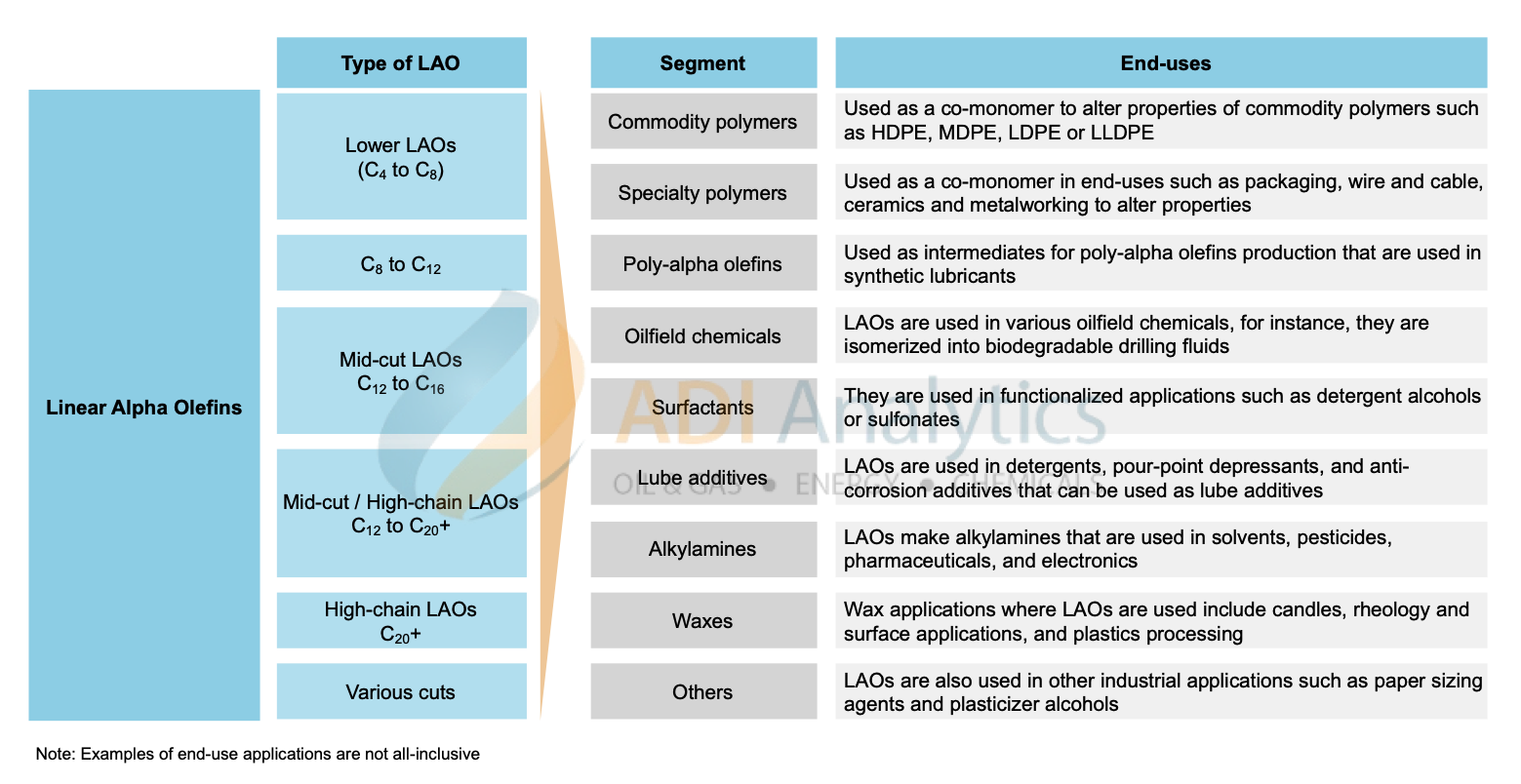
Exhibit 1. Major applications of LAO by carbon number range.
3. Capacity growth is creating persistent product-slate imbalances
Over the past several years, substantial capacity additions from producers such as INEOS and ExxonMobil in Asia and the Middle East have shifted the market toward oversupply in several LAO segments. While overall demand continues to grow, consumption patterns vary significantly by carbon chain length, creating structural imbalances across the product slate.
Full-range producers face ongoing yield challenges because demand varies substantially by carbon number. As a result, heavier fractions are often oversupplied while higher-demand short-chain olefins remain constrained. The industry’s challenge is no longer simply expanding capacity but aligning production with the fractions customers actually need.
As producers continue to add capacity, balancing expansion with evolving product-specific demand will remain a central strategic issue for the market.
4. On-purpose technologies are reshaping competitive advantage
On-purpose production technologies are gaining momentum, enabling manufacturers to selectively produce products such as 1-hexene and 1-octene without generating excess heavy fractions. These technologies directly address one of the industry’s longstanding challenges: the mismatch between demand for high-value short-chain olefins and the production profile of traditional full-range facilities.
As market demand becomes increasingly concentrated in specific carbon numbers, production flexibility is becoming a more important competitive advantage. Manufacturers that can optimize output toward high-demand products while minimizing surplus heavy fractions are likely to be better positioned in an increasingly segmented market. Companies that invest in flexible production technologies will be better equipped to capture value as demand patterns continue to diverge across carbon chains.
5. Higher-value applications continue to create new growth opportunities
C10 (1-decene) is a key feedstock for polyalphaolefins (PAOs), which represent approximately 11% of total LAO demand. PAOs support high-performance lubricant applications and typically generate higher margins than commodity-grade LAOs, making them an attractive market segment despite their smaller share of total demand.
Beyond lubricant applications, emerging opportunities are developing in green chemistry and advanced thermal management. These include bio-based surfactants and LAO-derived dielectric fluids for electric vehicle battery systems. While these end markets remain smaller than polyethylene, they offer attractive opportunities for differentiation, innovation, and value creation.
Growing interest in sustainable materials, electrification, and specialty performance chemicals is expected to support continued development of these higher-value LAO applications. Companies that combine product innovation with strong positions in targeted end markets will be best positioned to benefit.
ADI Analytics has worked with companies across the specialty chemicals value chain—including oilfield chemical suppliers and detergent producers—to assess raw material availability and understand global LAO market dynamics.
For companies focused on polyethylene value chains, ADI continues to provide market intelligence through its long-running assessment of C4-C8 alpha olefins used in LLDPE and HDPE production.
For a broader perspective on the industry, ADI Analytics has published its multi-client study on the global LAO market, covering the full C4-C20+ value chain. This study will help producers, investors, technology licensors, and strategic stakeholders navigate the evolving landscape.
Below are the key questions addressed in the study:
- Will global demand absorb announced capacity additions?
- Which fractions are most vulnerable to oversupply?
- How will changing trade flows affect regional competitiveness?
- Which producers are best positioned to capture growth?
- What will be the impact of geopolitical and economic uncertainty on supply chains?
We welcome you to join this study. As a subscriber, you’ll have multiple options to customize your access to the study deliverables. These include a report of approximately 100 pages and a detailed data sheet. You’ll also get a workshop to share findings and discuss underlying assumptions and a complimentary pass to the ADI Forum. Download our study prospectus to learn more.
About ADI Analytics
ADI is a prestigious, boutique consulting firm specializing in oil and gas, energy, and chemicals since 2009. We bring deep expertise in a broad range of markets where we support Fortune 500, mid-sized and early-stage companies, and investors with consulting services, research reports, and data and analytics, with the goal of delivering actionable outcomes to help our clients achieve tangible results.
We also host the ADI Forum that brings c-suite executives together for meaningful dialogue and strategic insights across the oil & gas, energy transition, and chemicals value chains. Learn more about the ADI Forum.
Subscribe to our newsletter or contact us to learn more.