
Volatile operator spending and hyper-competition strain margins across oilfield service and equipment lines.
E&P capital discipline, fluctuating rig counts, and tightening methane emissions regulations force service providers to continuously adapt. Companies must balance competitive day rates with investments in technology, automated frac spreads, and downhole tools. ADI Analytics guides OFSE leadership on market strategy, technology commercialization, operational benchmarking, and M&A transactions.

What keeps oilfield services and equipment leaders up at night
E&P operators swiftly cut capital expenditures during market downturns, driving down utilization and squeezing day rates across drilling and completion assets. Unconventional operations simultaneously demand higher technical intensity, requiring continuous capital allocation toward automated frac spreads and advanced downhole tools without guaranteed long-term margins.
Service providers face intense margin erosion from project-based bidding and pressure to negotiate long-term master service agreements under compressed pricing structures. At the same time, evolving environmental policies and stricter methane regulations necessitate immediate operational compliance investments before commercial returns are realized.
The cost of misjudging regional rig counts, lateral lengths, or equipment deployment schedules directly threatens asset utilization, free cash flow, and market share across key basins.
Who we are
Oilfield services and equipment advisory, built on 15+ years and 1,000+ projects. Our team brings deep technical and commercial expertise spanning drilling, completions, production, artificial lift, subsea equipment, and downhole technologies across global onshore and offshore basins.
What clients engage us to do
Forecast OFSE markets and demand
We provide comprehensive market sizing, segmentation, and demand forecasting across the full spectrum of OFSE product and service lines. Leveraging proprietary models that integrate rig activity, well counts, lateral lengths, and completion intensity, we deliver actionable insights into regional supply-demand dynamics and pricing trends.
Develop corporate strategy and business plans
We help clients drive growth through portfolio optimization, product roadmapping, service-line expansion assessments, and market entry strategy development. Our team evaluates emerging technologies, including AI applications in drilling and advanced downhole materials, to guide R&D prioritization, strategic partnerships, and investment decisions.
Advise on M&A transactions and due diligence
We provide end-to-end support for acquisitions and investments, including target screening, technical evaluation, and commercial due diligence. Our team assesses asset utilization, contract backlogs, performance-based master service agreements (MSAs), and market share dynamics while performing discounted cash flow (DCF) valuations and precedent transaction analyses specific to OFSE businesses.
Benchmark operational costs and performance
ADI provides detailed benchmarking of day rates, service-line pricing, and total well construction costs. We evaluate operational efficiency through metrics such as drilling days, daily frac stages, and equipment uptime across diverse basins and plays while estimating capital and operating costs for greenfield and brownfield developments.
Trusted by OILFIELD SERVICES & EQUIPMENT companies around the world


For organizations seeking rapid access to market intelligence, ADI’s study on long-term oil & gas, and chemicals growth outlook helps clients understand investment cycles, capacity additions, and demand growth.
More industry expertise


Related insights

 Article
Artificial lift’s next ride
Artificial lift has been a core production technology for decades. The next phase of growth is increasingly being driven by software, automation, analytics, and production optimization rather than hardware alone. Operators are managing larger well inventories, more mature shale assets, and growing pressure to reduce lease operating expense (LOE), improve uptime, and extend run life. […]
 Article
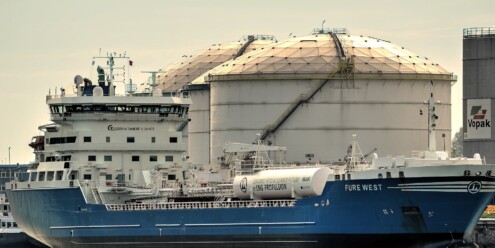
Bulk liquid storage is shifting from capacity to capability
Liquid bulk storage operators are entering a more selective growth cycle. Demand remains resilient across fuels, chemicals, liquefied petroleum gas (LPG), natural gas liquids (NGLs), biofuels, ammonia, and methanol. Increasingly, value is shifting toward terminals that can handle a broader range of products, connect to major trade routes, and generate higher returns from existing assets. […]

 Premium content
Implications of UAE’s exit from OPEC
Part of ADI Analytics’ ongoing coverage of the implications of the Iran conflict across oil & gas, LNG, refined products, and chemicals. The UAE’s exit from OPEC (see our prior blog) in late April 2026 reflects a decisive shift toward a volume‑driven strategy focused on monetizing its hydrocarbon resource base ahead of the global energy […]

Sign up for our newsletter
Don’t worry – we never share or sell your information.