Industry: Upstream and E&P

Multi-client studies Icon Multi-client studies

Water limits are reshaping operations in oil and gas, power, and chemicals

Water now sets operating limits in three industries ADI covers. Permian produced water volumes rose from 11.2 million bbl/d in 2017 to 24.9 million bbl/d in 2025, and regulators have restricted the disposal wells that take most of it. Refineries and chemical plants on the Texas Gulf Coast and the Rhine face allocation plans and […]

Article Icon Article

EU methane rule delay: A tactical retreat or climate setback?

The European Union (EU) Methane Regulation is known for its strict methane emissions transparency requirements for foreign oil and gas imports, and has driven methane emissions monitoring and reporting efforts, especially among oil and gas players serving the EU market. Under Article 28 of the EU Methane Regulation, importers are required to demonstrate that fossil […]

News Icon News

ADI insights featured in Enterprise AM

ADI Analytics is pleased to share that our CEO, Uday Turaga, was featured in Enterprise AM discussing Kuwait’s Project Peregrine and the growing trend of infrastructure monetization across the global energy sector. Kuwait’s recent transaction is part of a broader wave of deals involving major regional players like ADNOC Group, Aramco, OQ, and Bapco Energies. […]

Premium content Icon Premium content

What will it take to scale geothermal?

Geothermal is attracting more attention than at any point in recent decades. Fervo’s IPO brought public-market attention to enhanced geothermal systems, and Quaise’s recent $134 million Series B first close showed continued investor appetite for superhot geothermal and millimeter-wave drilling. Developers are improving drilling performance, stimulation design, reservoir modeling, subsurface monitoring, and project execution. Oil […]

Premium content Icon Premium content

The next wave of energy infrastructure deals will reach beyond pipelines

Kuwait Oil Company’s $16 billion pipeline lease-and-leaseback with Blackstone, Brookfield, and KKR marks the latest step in a broader shift in energy infrastructure ownership. The deal covers 13 crude oil pipelines across roughly 320 kilometers, gives the investor consortium a 49% stake in a new joint venture, and generates $7.85 billion in upfront proceeds for […]

Article Icon Article

Artificial lift’s next ride

Artificial lift has been a core production technology for decades. The next phase of growth is increasingly being driven by software, automation, analytics, and production optimization rather than hardware alone. Operators are managing larger well inventories, more mature shale assets, and growing pressure to reduce lease operating expense (LOE), improve uptime, and extend run life. […]

Premium content Icon Premium content

Oil & gas upstream: 2026 mid-year trends and supply chain impacts

The first half of 2026 marks a structural inflection point for the upstream oil and gas ecosystem. As Tier 1 acreage naturally depletes and consolidation reshapes operator leverage, the traditional “volume-driven” oilfield business model is giving way to an era of intense capital efficiency, advanced well architecture, and software-enabled optimization. For OEMs, OFS providers, and […]

Premium content Icon Premium content

Implications of UAE’s exit from OPEC

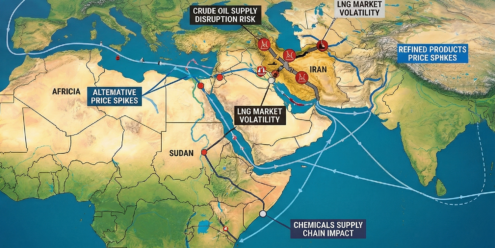
Part of ADI Analytics’ ongoing coverage of the implications of the Iran conflict across oil & gas, LNG, refined products, and chemicals. The UAE’s exit from OPEC (see our prior blog) in late April 2026 reflects a decisive shift toward a volume‑driven strategy focused on monetizing its hydrocarbon resource base ahead of the global energy […]

Article Icon Article

Why did the UAE leave OPEC?

Part of ADI Analytics’ ongoing coverage of the implications of the Iran conflict across oil & gas, LNG, refined products, and chemicals. On April 28, 2026, the United Arab Emirates (UAE) announced it was quitting the Organization of the Petroleum Exporting Countries (OPEC), the producer group created in 1960 to coordinate and unify petroleum supply […]

News Icon News

Newsletter: Why oil may fall back to the $60s by end‑2026

In the May 2026 edition of the ADI Newsletter, ADI examines why oil prices, lifted by Iran-related risks, are expected to ease back into the sixty-dollar range as fundamentals reassert, while helium markets tighten amid Middle East disruptions and Russian export limits. At the same time, SLB’s acquisition of S&P Global’s upstream software highlights accelerating […]

Article Icon Article

Why oil is likely to fall back into the $60s by end‑2026

Part of ADI Analytics’ ongoing coverage of the implications of the Iran conflict across oil & gas, LNG, refined products, and chemicals. Oil prices have surged again, driven by the Iran conflict and fears of disruption in the Middle East. These risks matter, and they explain today’s prices. But history and current fundamentals suggest they […]

Premium content Icon Premium content

Iran conflict implications on oil prices and stakeholders

Part of ADI Analytics’ ongoing coverage of the implications of the Iran conflict across oil & gas, LNG, refined products, and chemicals. The global energy landscape has been fundamentally altered by the ongoing conflict in the Middle East. Following the onset of hostilities on February 28, 2026, the Strait of Hormuz remains functionally impaired, stranding […]