Kuwait Oil Company’s $16 billion pipeline lease-and-leaseback with Blackstone, Brookfield, and KKR marks the latest step in a broader shift in energy infrastructure ownership. The deal covers 13 crude oil pipelines across roughly 320 kilometers, gives the investor consortium a 49% stake in a new joint venture, and generates $7.85 billion in upfront proceeds for Kuwait Petroleum Corporation. Kuwait Oil Company keeps 51%, full ownership, and operational control under a 20.5-year volume-based tariff framework.
Kuwait is using a structure already tested by ADNOC and Saudi Aramco: sell minority economics, keep majority ownership, retain operating control, and use long-term tariffs to support investor returns. These deals help NOCs raise capital for upstream, gas, downstream, and diversification programs while keeping control of strategic assets. They also give infrastructure investors long-term exposure to assets with visible volumes, strong counterparties, and tariff-linked cash flows.
Where does this model go next?
ADI research identifies five findings: the features of this repeatable model, crude and gas pipeline assets likely to see similar deals, regions with credible opportunities, potential in data centers, refineries, chemicals, and power, and the risks and mitigation strategies that will shape future transactions.
1. The GCC has established the clearest template for oil and gas infrastructure monetization
The GCC model has three features: minority economics for investors, operating control for the national oil company, and a long-term tariff or lease payment mechanism. ADNOC, Saudi Aramco, OQ, Bapco Energies, and now Kuwait Petroleum Corporation have all used versions of this approach.
The structure lets governments raise foreign capital while retaining control of strategic assets. Investors can underwrite infrastructure-style returns without taking upstream exploration risk or direct commodity price exposure. That makes pipelines, gas networks, processing plants, and storage systems natural candidates (see Exhibit 1 for a list of past transactions).
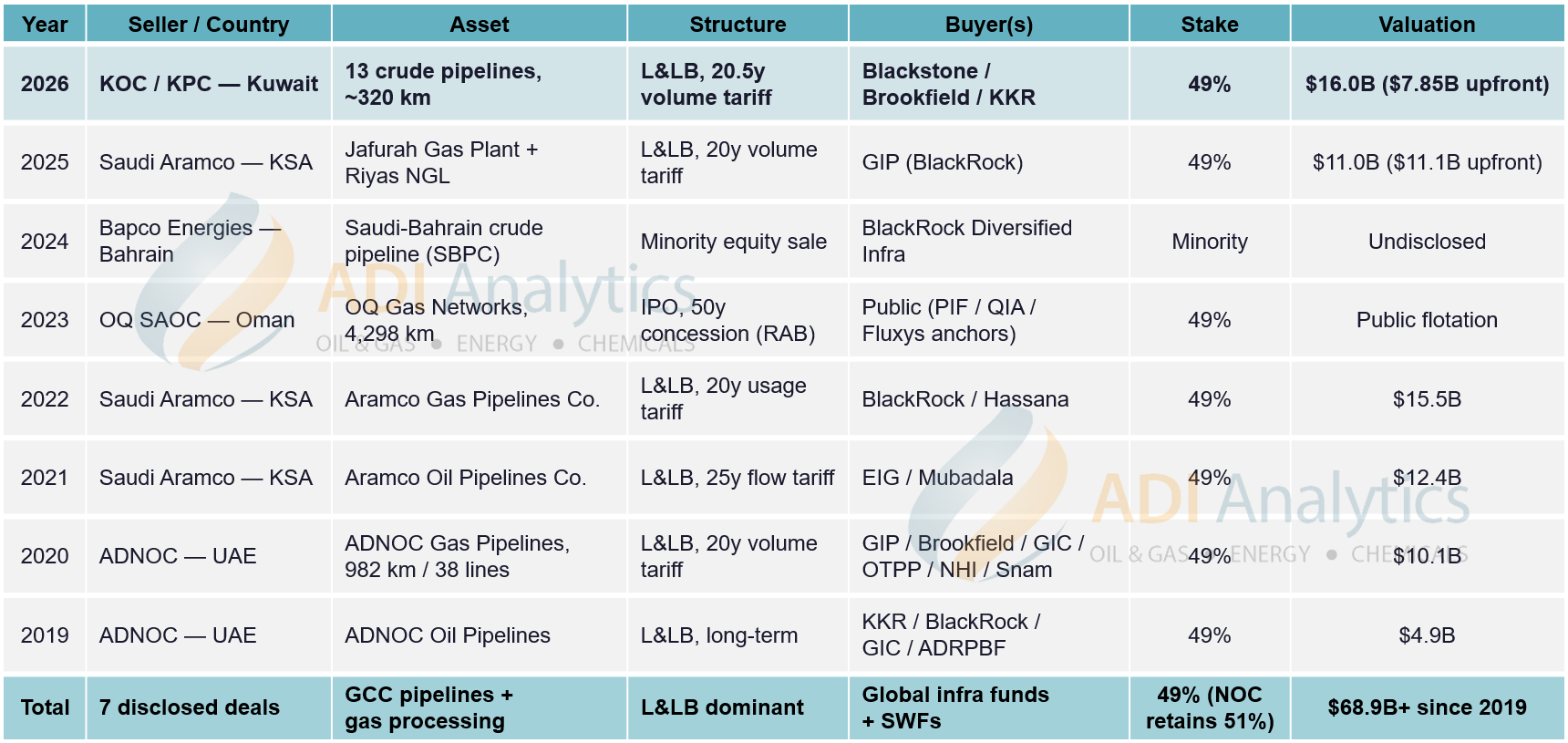
Exhibit 1. Illustrative list of past transactions relevant to the energy infrastructure monetization model.
ADI’s infrastructure advisory work sits directly in this space. Investors and asset owners need to know whether an asset has durable demand, credible utilization, defensible tariffs, and manageable regulatory and counterparty risk.
ADI supports those decisions through market assessments, asset screening, commercial due diligence, utilization forecasts, scenario analysis, and infrastructure strategy across pipelines, LNG, power, gas processing, water, storage, and industrial utilities. This work fits within ADI’s broader infrastructure advisory and consulting services capabilities, where the focus is on helping clients evaluate markets, investments, risks, and strategic options before committing capital.
Kuwait is now applying the same model used in Abu Dhabi and Saudi Arabia. The transaction also shows how politically sensitive markets can participate in infrastructure monetization by preserving majority ownership, operating control, and national decision-making over production and refining.
2. The next deals will move from pipelines into gas processing, LNG, power, and industrial utilities
Future transactions (see Exhibit 2 for a list of potential opportunities) are likely to include gas processing, LNG infrastructure, storage, power generation, industrial utilities, water systems, ports, carbon infrastructure, and hydrogen networks.
The same logic applies to assets with high upfront capital, steady utilization, and clear counterparties. Saudi Aramco’s Jafurah transaction already showed that investors are willing to finance more technical assets if the national oil company keeps physical operations and tariff payments are clear.
The rest of this article is available to all ADI Plus subscribers.
Log in or subscribe to unlock ADI Plus content >>
Have questions? We're happy to help.
About ADI Analytics
ADI is a prestigious, boutique consulting firm specializing in oil and gas, energy, and chemicals since 2009. We bring deep expertise in a broad range of markets where we support Fortune 500, mid-sized and early-stage companies, and investors with consulting services, research reports, and data and analytics, with the goal of delivering actionable outcomes to help our clients achieve tangible results.
We also host the ADI Forum that brings c-suite executives together for meaningful dialogue and strategic insights across the oil & gas, energy transition, and chemicals value chains. Learn more about the ADI Forum.
Subscribe to our newsletter or contact us to learn more.