


Water now sets operating limits in three industries ADI covers. Permian produced water volumes rose from 11.2 million bbl/d in 2017 to 24.9 million bbl/d in 2025, and regulators have restricted the disposal wells that take most of it. Refineries and chemical plants on the Texas Gulf Coast and the Rhine face allocation plans and record-low river levels. Power plants face cooling limits as data center load grows.
ADI is launching a multi-client study, Water risks and opportunities in oil & gas, power, and chemicals, that quantifies these constraints through 2035, benchmarks the treatment and cooling technologies that address them, and compares the cost of each option.
Five themes the study covers
1. Produced water volumes exceed disposal capacity
What is changing. Permian produced water has grown 2.2 times since 2017 to 24.9 million bbl/d (Exhibit 1). Produced water volume is expected to be about 5 billion bbl a year even after 100% recycling for completions. Permian’s in-basin disposal capacity is likely to max out within 2.5 years and 2.1 billion bbl a year needing alternatives by 2035. ADI’s 2024 analysis of water management in maturing shale plays found Permian wells producing 3 to 4 barrels of water per barrel of oil and the basin recycling about 20% of its produced water.
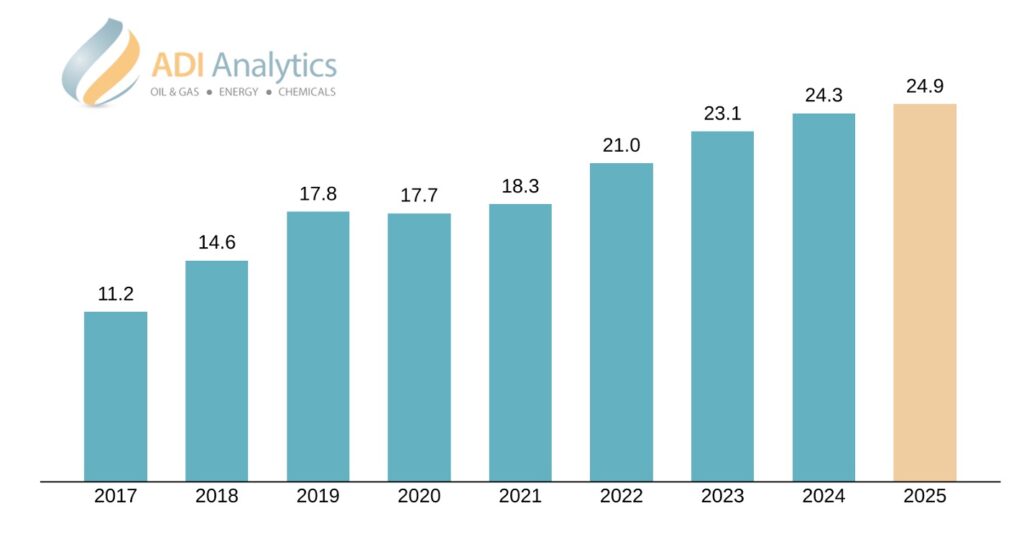
Exhibit 1: Permian produced water, million bbl/d.
How the study addresses it. A basin water-balance model for upstream sizes remaining disposal capacity through 2035 and the volumes that move to recycling, treatment, or long-haul transport.
2. Regulation closes disposal options and opens reuse options
What is changing. The Texas Railroad Commission suspended disposal permits in seismic response areas from June 2025 and widened the review radius for disposal wells to a half mile. A 2025 court ruling in the Cactus Water case addressed ownership of produced water. Senate Bill 1145 moves land-application permitting to the Texas Commission on Environmental Quality, with a 2027 target, and New Mexico petition WQCC 26-18 is pending before the state’s Water Quality Control Commission. ADI’s 2018 outlook on saltwater disposal regulation compared permitting across the Marcellus, Utica, Bakken, Eagle Ford, and Permian.
How the study addresses it. Each segment deep dive covers permits, discharge, ownership, and allocation rules, with dates for when each option opens or closes.
3. Water supply for refining and chemicals is a local problem
What is changing. Industry uses roughly half to 60% of Corpus Christi city water, and a draft plan would cut large users by 25% in a Level 1 emergency. A large refiner in the city plans to reuse about 1.5 million gallons a day of treated wastewater. On the Rhine, the Kaub gauge reached a record low of 28 cm on 29 July 2026, below the 31.5 cm recorded in 2022, and BASF warned it may cut output of some products.
How the study addresses it. A water-stress screen covers refining and chemical assets, and supply sourcing, reuse, and treatment options are compared by hub, with allocation and drought risk.
4. Power generation meets competing demand for cooling water
What is changing. EDF cut reactor output when rivers warmed, and both Cernavoda units in Romania shut on low Danube flows. Environmental groups have found that Texas gas plants used about 56 billion gallons in 2024, against about 45 billion gallons for the city of Austin. Other groups have reported that the Texas 2027 State Water Plan excludes demand from data centers, carbon capture, and hydrogen.
How the study addresses it. The study evaluates cooling designs, including dry and hybrid systems, and supply options for thermal generation, with data center load growth as a demand driver.
5. Technology and economics decide which options work
What is changing. Operators choose among recycling, local disposal, fresh water sourcing, long-haul disposal, desalination, and zero liquid discharge, and each pathway has a different cost per barrel. Ownership of the infrastructure also varies: in-house, joint ventures, or midstream companies. ADI’s 2018 analysis of water transportation described pipelines replacing trucks that carry 120 to 160 barrels per load.
How the study addresses it. A technology benchmark compares options by water type on contaminant removal, energy, cost, and readiness. Field results from pilots and commercial plants, cost curves for each segment, and an assessment of infrastructure and operating models complete the economics. The study also covers who will buy treated water, including data centers, agriculture, mining, industry, and construction.
How the study is organized
The study has a shared core on drivers, technology, and treated-water markets, plus three segment deep dives: upstream oil and gas, refining and chemicals, and power generation. Exhibit 2 compares the role of water, the binding constraint, and the study approach in each segment.
Each deep dive covers water balance and outlook, regulation and legal, economics and cost curves, and infrastructure and operating models. Conventional midstream, carbon capture, hydrogen, and municipal utilities are out of scope. The geography is the U.S. in depth, with international cases.
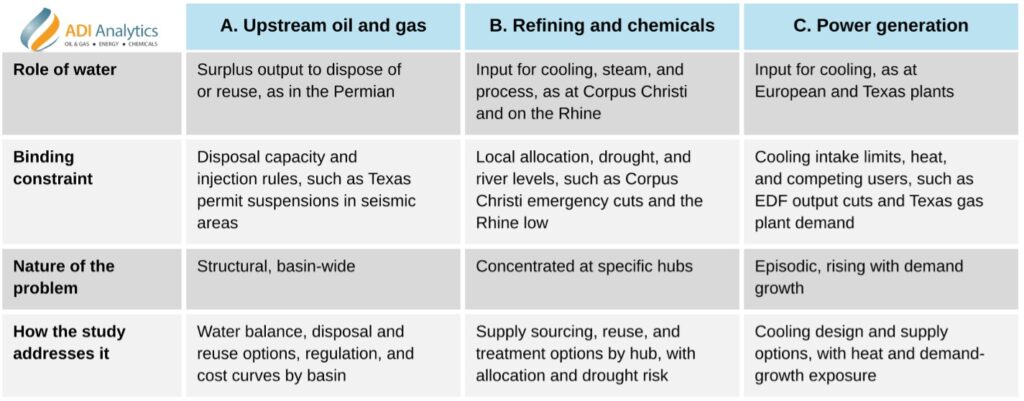
Exhibit 2: Water constraints and study approach by segment.
Subscribers receive an executive summary, a full report, data workbooks, and a workshop with the ADI analyst team. Subscription options run from the core plus one segment to the core plus all three segments, and a premium option adds quarterly updates through 2027. The program runs 14 weeks from kick-off, with an interim review at the mid-point.
Get the prospectus
The prospectus for Water risks and opportunities in oil & gas, power, and chemicals is available for download. To discuss participation, contact us at +1 (281) 506-8234 or info@adi-analytics.com.
About ADI Analytics
ADI is a prestigious, boutique consulting firm specializing in oil and gas, energy, and chemicals since 2009. We bring deep expertise in a broad range of markets where we support Fortune 500, mid-sized and early-stage companies, and investors with consulting services, research reports, and data and analytics, with the goal of delivering actionable outcomes to help our clients achieve tangible results.
We also host the ADI Forum that brings c-suite executives together for meaningful dialogue and strategic insights across the oil & gas, energy transition, and chemicals value chains. Learn more about the ADI Forum.
Subscribe to our newsletter or contact us to learn more.