
 Article
Energy transition: Faster and faster in 2021
In 2020, the energy transition thrived amid a difficult energy landscape due to heightened demand, policy support, technological progress, and diversification by incumbents.
 Article
In 2020, the energy transition thrived amid a difficult energy landscape due to heightened demand, policy support, technological progress, and diversification by incumbents.

 News
News
In the October 2020 edition of the ADI chemicals newsletter, we examined why digital transformation in the chemical industry has remained evolutionary rather than revolutionary, highlighting key structural and operational barriers. Alongside this, we provided economic updates with a focus on global GDP and industry performance indicators. The issue also features major sustainability moves—from LyondellBasell’s […]
 Videos
During the 2020 ADI Forum, Gregory Dolan, CEO, Methanol Institute, discussed the comparative cost efficiency of methanol and Fischer-Tropsch (FT) processes for gas-to-liquids production. While large FT projects in regions like Qatar are significantly larger than methanol plants, methanol production offers greater adaptability to various gas feedstocks. The investment for a mega methanol plant producing […]
 Videos
During the 2020 ADI Forum, Gregory Dolan, CEO, Methanol Institute, discussed the growing significance of methanol in the global energy landscape. Despite historical concerns about toxicity and handling, innovations, such as Li Shufu’s methanol-powered taxis in China, demonstrate its safe integration into transportation. With 20,000 such taxis operating in China, methanol is emerging as a […]
 Videos
During the 2020 ADI Forum, Gregory Dolan, CEO, Methanol Institute, highlighted the thriving U.S. methanol industry, fueled by significant investments that are creating jobs and stimulating economic growth. A single large-scale methanol plant, capable of producing 4,000 tons daily, can lead to a $1.1 billion investment, thousands of jobs, and billions more in economic impact. […]
News
In the January 2020 edition of the ADI chemicals newsletter, we covered how global economic indicators (GDP, PMI) continued to decline, signaling ongoing uncertainty. In the Americas, there were moves in plastics recycling (Avangard/Dow), ethylene production (Formosa Plastics), and a joint venture acquisition. In Europe, BASF expanded polyurethane capacity, Nestlé invested in reducing virgin plastics, […]
 Article
Interest in hydrogen as a fuel and source of energy is surging again.
News
In the September 2019 edition of the ADI chemicals newsletter, we highlight key developments in the global chemical industry amid ongoing economic uncertainty. The Purchasing Manager’s Index (PMI) showed a decline in most regions, except for India and Brazil. Major announcements included new propane dehydrogenation (PDH) projects in the Americas, expansions in Europe, and capacity […]
 Videos
At the 2019 ADI Forum, Austin Knight, COO, Large Industries, Air Liquide, USA joined Uday Turaga, CEO, ADI Analytics on the downstream panel. In terms of capital investments, the focus was on expanding industrial gas networks (oxygen, nitrogen, hydrogen) along the Gulf Coast, particularly in Texas and Louisiana. These networks connect various assets and customers, […]
 Videos
At the 2019 ADI Forum, Eberhard Lucke, VP, Process Engineering & Technology, NiQuan Energy, presented a detailed analysis of the factors contributing to the difficulties faced by GTL plants during the gas utilization panel. His insights into this technology’s technical and economic complexities provided valuable context for understanding the challenges and opportunities in the field. […]
 Videos
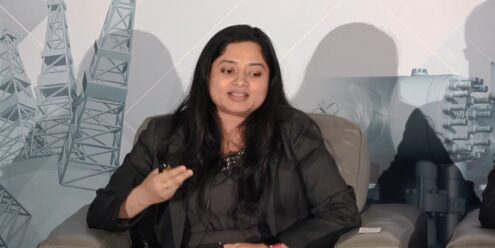
Panuswee Dwivedi, Analyst, ADI Analytics, discussed the implications of slowing global methanol growth for the U.S. methanol industry at the 2019 ADI Forum. She pointed out that while the global olefins market continues to expand, its growth rate has decreased from 6% to 4%, largely due to the high costs associated with the methanol-to-olefins (MTO) […]
 Videos
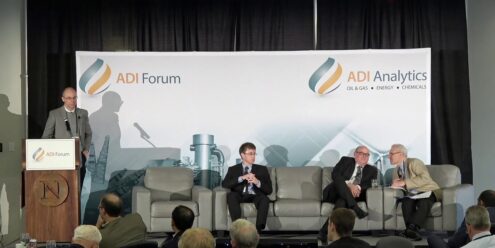
At the 2018 ADI Forum, James Lamoureaux, Esben Sorensen, and Evan Visser discussed the growing trend of gas monetization through chemical conversion, particularly toward methanol, driven by increasing methanol demand in Asia for olefins production. They highlighted the development of new methanol capacity and the emergence of small-scale technologies, providing insights into the evolving landscape […]