
 Article
Is power-to-gas a viable option?
Competitive renewable power can drive power-to-gas in some regions.
 Article
Competitive renewable power can drive power-to-gas in some regions.

 News
News
In the November 2020 edition of the ADI newsletter, we explored the evolving role of utilities in expanding EV charging infrastructure and how this supports broader electrification goals. We reviewed recent U.S. refinery closures announced by major players, analyzed the growing importance of sulfur removal in natural gas production, and highlighted new ADI insights on […]
 Article
With the 2020 presidential election right around the corner, ADI Analytics has summarized the proposed energy policies of Donald Trump and Joe Biden. Our summary is based on the candidates’ energy policies from their websites and comments on energy issues from interviews and speeches.
 Article
What are challenges facing energy transition and how is innovation addressing them?

 Premium content
Liquefied natural gas (LNG) is increasingly seen as one of several catalysts to the energy transition. As countries seek to reach their decarbonization goals, they will have to go beyond switching from coal to natural gas-fired power generation, and explore carbon-efficient options across all energy demand segments. Many countries around the world are now seeing […]
 Article
Environmental, social, and governance (ESG) issues are all the rage in oil & gas and energy markets today. ADI has compiled the top 10 ESG trends in energy based on our research and consulting work.
 Article
Sweeping impacts across the energy value chain from the COVID-19 pandemic are turning a spotlight now on the corporate and financial performance of various segments.

 Videos
In this insightful weekly webinar, Uday Turaga, CEO of ADI Analytics, leveraged deep expertise in oil and gas, energy, and chemicals to guide utilities and power markets through the “perfect storm” of the oil price crash and COVID‑19. He explored market disruptions, the specific challenges facing companies serving commercial and industrial customers, and the strategic […]
 Article
Watch a recording of our weekly webinar series on oil & gas in the “perfect storm”, and download the presentation below.
 Videos
At the 2020 ADI Forum, Mark Herrmann, VP, Commercial Operations, NRG Energy, and Eric Carlos, Sr. Executive Advisor, SoEnergy International, spoke during the power panel. Key topics included the future of transmission lines, the role of large-scale renewable projects like wind and solar, and the need for new transmission infrastructure. The central theme was that […]
 Videos
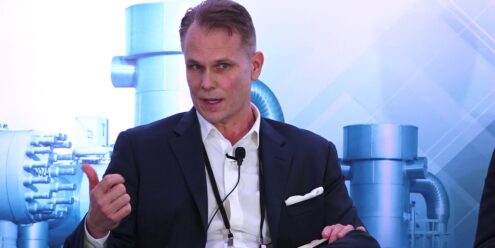
At the 2020 ADI Forum, Mark Herrmann, VP, Commercial Operations, NRG Energy joined moderator Uday Turaga, CEO, ADI Analytics on the power panel. Key topics included the evolving power market, the role of natural gas, and opportunities for oil and gas companies. The speaker emphasized how coal plant retirements and the growth of renewables had […]
 Videos
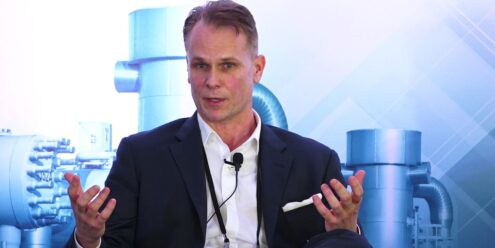
Nuclear power in the U.S. is facing a critical juncture, as highlighted during the 2020 ADI Forum’s panel featuring Mark Herrmann, VP Commercial Operations, NRG Energy and Eric Carlos, Sr. Exec. Advisor, SoEnergy International. The discussion, moderated by Uday Turaga (ADI Analytics), centered on the uncertain future of nuclear energy amid evolving competitive energy markets […]