 Article
Hydrothermal liquefaction for renewable fuels
Energy transition is driving new interest in biofuels. Hydrothermal liquefaction is an interesting pathway although it needs further development.
 Article
Energy transition is driving new interest in biofuels. Hydrothermal liquefaction is an interesting pathway although it needs further development.
 Article
The global shipping industry is one of the hard-to-abate industries when it comes to decarbonization. While it constitutes a small share of global CO2 emissions today, it may see astronomical amount of growth if left unchecked. Global shipping industry demand is expected to see a 275% increase by 2050 compared to 2020 levels. To address […]
 Article
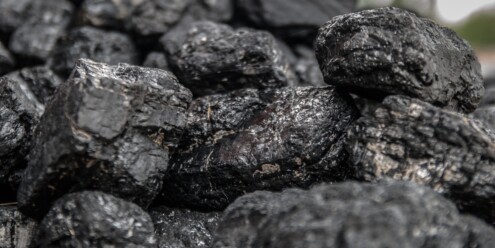
Amid the global shift away from coal-fired power, the coal industry is attempting to find its place in a new ESG-focused world.
 Article
With carbon capture becoming more prevalent in today’s world, CO2 conversion is becoming one of the popular utilization methods for the captured emissions.
Article
Given the IMO’s ambitious goals to halve the shipping industry’s 2050 GHG emissions from 2008 GHG emission levels, shipowners and ship engine manufacturers must carefully consider a broader range of marine fuels for the world’s future fleet, such as ammonia and methanol.
 Article
Companies are buying carbon offsets to become “net-zero.” What are the risks and challenges with carbon offsets and do they mitigate climate change?

 Videos
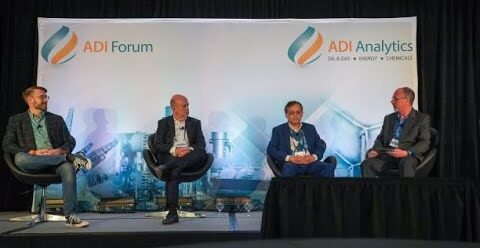
At the 2022 ADI Forum, Brandon Schwertner, CEO, Priority Power Management, discussed the company’s customer-centric approach to energy transition during the Navigating the Energy Transition panel, moderated by Uday Turaga, CEO, ADI Analytics. Schwertner emphasized that there was no one-size-fits-all solution, with Priority Power focusing on tailoring energy strategies based on client goals, consumption patterns, […]
 Videos
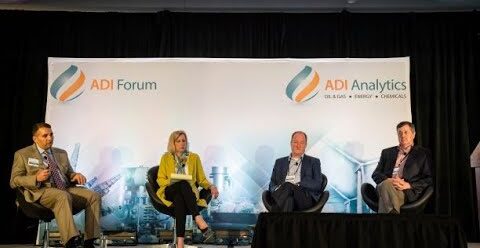
At the 2022 ADI Forum, David Hatrick, VP of Innovation at Huntsman, and Trevor Best, CEO of Syzygy Plasmonics, Inc., discussed the power of partnerships in advancing the hydrogen industry. They highlighted how collaboration had driven innovations in reactor technology and carbon capture, emphasizing Huntsman’s efforts to refine reactor designs, select optimal locations, and maximize […]
 Videos
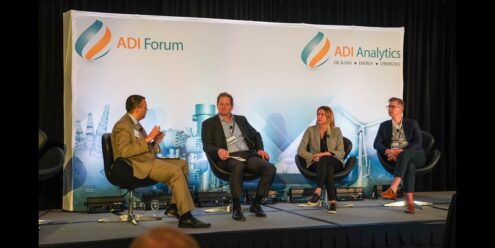
At the 2022 ADI Forum, Dena Wiggins, CEO, Natural Gas Supply Association and industry leaders discussed the challenges of implementing carbon pricing, noting that while some sectors had recognized its necessity earlier, the natural gas trade association had formally supported it three years prior, becoming the first major group to do so. Despite the political […]
 Videos
At the 2022 ADI Forum, Eric Bradley, MD of New Energies & Sustainability at Taurus Investment Holdings, and industry experts discussed the global building stock, noting that 50% of existing structures would remain for the next 30–40 years, while an equal percentage still needed to be built. The conversation emphasized scalability in sustainable construction, focusing […]
 Videos
At the 2022 ADI Forum, Kirsty McCormack, VP of Special Projects ,BP, and Heath DePriest, VP of Emerging Energy, Phillips 66, discussed the industry’s readiness for energy transition during the Navigating the Energy Transition panel, moderated by Uday Turaga, CEO of ADI Analytics. McCormack outlined BP’s strategy as a “greening company”, emphasizing its commitment to […]
 Videos
At the 2022 ADI Forum, Kirsty McCormack, VP of Special Projects at BP, and Heath DePriest, VP of Emerging Energy at Phillips 66, emphasized the importance of setting intermediate milestones for emissions reduction during the Navigating the Energy Transition panel, moderated by Uday Turaga, CEO of ADI Analytics. McCormack outlined BP’s dual approach—reducing emissions from […]