Industry: Industrials & Digital

Premium content Icon Premium content

2025 Midstream outlook: Growth tied to U.S. hydrocarbon exports

In 2025, the U.S. midstream oil and gas industry is expected to see growth opportunities, tied to rising hydrocarbon exports with new pipelines and export capacity planned to alleviate bottlenecks. Key trends to look out for include the following: The rest of this article is available to ADI Plus Essential subscribers. ADI Plus Enhanced and […]
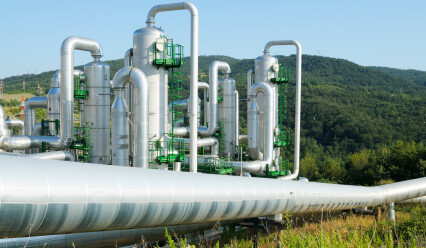
Article Icon Article

Midstream operators tackle methane emission intensity – Part 1

Methane, the primary component of natural gas, is a potent greenhouse gas, significantly more impactful than carbon dioxide over a 20-year period. The midstream sector, responsible for gathering, processing, and transporting natural gas, is a key focus in efforts to reduce methane emissions in the oil and gas industry. Gathering and boosting operations, which collect […]

Videos Icon Videos

AI, decarbonization, and the future of specialty chemicals

At the 2025 ADI Forum, Rob Helwick, CEO & President, Meridian Chemicals, and Anahita Khanlari, Solution Marketing Director, AspenTech, joined moderator Panuswee Dwivedi, Project Manager, ADI Analytics. The group participated in the specialty chemicals panel. Key topics include the chemical industry’s focus on digitalization, efficiency, and sustainability, driven by market shifts and feedstock challenges. This […]

Videos Icon Videos

Powering data centers: The clean energy challenge

At the 2025 ADI Forum, Marcos Gomez, Director, Renewable Energy, BASF, and Justin Courtney, VP & CIO, Priority Power, joined moderator Uday Turaga, CEO, ADI Analytics in participating on the panel on renewable power and utilities. Key topics include the surging electricity demand from data centers, the evolving economics and expanding role of renewable power […]

Article Icon Article

Green fuels: Overcoming barriers to decarbonization

The global transition towards sustainable energy has placed green fuels at the forefront of efforts to decarbonize aviation, maritime, and heavy industries. These green fuels — renewable diesel (RD), liquefied natural gas (LNG), hydrogen, ammonia, and methanol — promise a low-carbon alternative to fossil fuels. However, mainstream adoption requires overcoming significant barriers, including scalability, infrastructure […]

Premium content Icon Premium content

Refineries in transition: Strategies for decarbonization

Refineries are responsible for the production of transportation fuels and other products, such as petrochemicals and lubricants, but they also contribute significantly to global GHG emissions. According to the U.S. Environmental Protection Agency (EPA), refinery GHG emissions in 2023 amounted to 160 million metric tons CO2 equivalent (MMT CO2e), with over 70% resulting from fuel […]

Article Icon Article

Can natural gas pipelines handle hydrogen?

Hydrogen is emerging as a promising option to decarbonize power generation, transportation, and other industries. One of the most significant barriers to scaling up hydrogen use is the lack of a transportation network. Currently, hydrogen is transported via high-pressure tube trailers and liquefied hydrogen tankers, but these methods are not economically feasible for large-scale and […]

Article Icon Article

The future of SAF under Trump: Will biofuels thrive or stall?

The reelection of President Donald Trump has raised concerns regarding the future of biofuels in the United States, including SAF. With the U.S. expected to produce 40% of global SAF supply through 2028, the already turbulent road to SAF adoption could face increased challenges during President Trump’s second term. SAF stakeholders have four primary concerns, […]

Premium content Icon Premium content

Methane emissions reduction: The game is on!

Decarbonization efforts in the oil and gas sector continue to gain momentum but face significant challenges. In our previous blog, we discussed the challenges oil and gas companies face in reducing upstream greenhouse gas (GHG) emissions and highlighted several initiatives major operators such as ExxonMobil, Chevron, and Shell have made in GHG emissions reduction. However, […]

Premium content Icon Premium content

New gas pipelines alleviate bottlenecks

The U.S. natural gas sector is witnessing another transformation and is ready for growth, despite limitations in the pipeline infrastructure, as a means to prepare for increasing demand for natural gas and address transportation constraints. Last year alone, new pipelines with a combined capacity of ~7 billion cubic feet per day (Bcf/d) came online, and […]

Article Icon Article

Refining margins under pressure: The impact of economic slowdown

Petroleum refiners globally are experiencing reduced margins in 2024 compared to the previous year, as illustrated in Exhibit 1. The 3:2:1 crack spread has fallen sharply in several regions. Amsterdam-Rotterdam-Antwerp (ARA) has seen its refinery margins fall from $24/bbl to $8/bbl, a drop of 66%. Los Angeles has also faced a sharp decline, with margins […]