The catalyst industry is entering a new phase, with 2026 marking a period of significant portfolio realignment and expansion into adjacent catalyst technologies and services across refining, petrochemical, polymer, and emissions-control markets. The transactions shown in Exhibit 1 highlight a broader shift in how companies are positioning themselves across the catalyst value chain. For instance, Honeywell’s acquisition of Johnson Matthey’s Catalyst Technologies business allows Honeywell to combine its digital, automation, and technology capabilities with Johnson Matthey’s catalyst expertise to offer integrated solutions. Meanwhile, Johnson Matthey also acquired CORMETECH to strengthen its position in emissions-control offerings including selective catalytic reduction (SCR) catalysts.
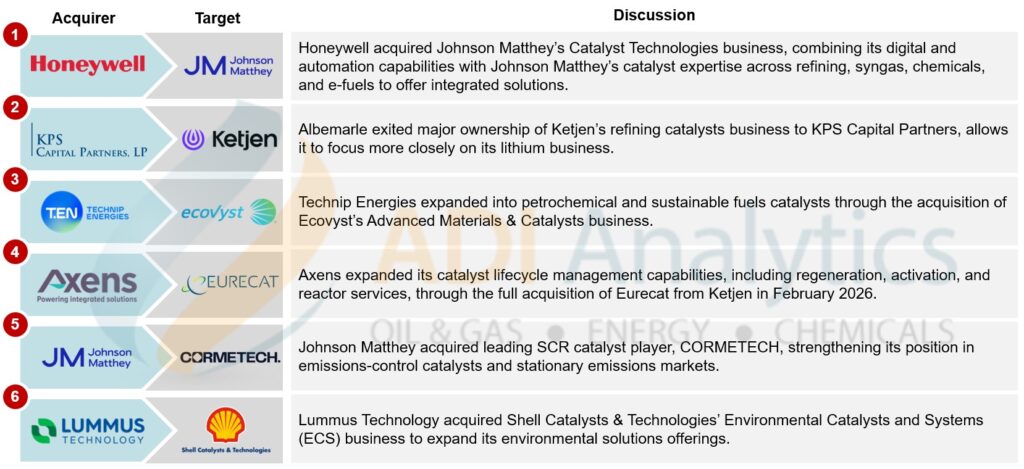
Exhibit 1: Selected catalyst M&A transactions in 2026.
At ADI, we have worked with catalyst manufacturers, technology licensors, investors, and industrial suppliers on market assessments, growth strategy, and transaction support. Based on recent M&A activity in the catalyst industry, several themes are emerging, including market-driven consolidation, changing customer behavior, energy transition and environmental applications, catalyst metal circularity, and digital services.
1. Catalyst consolidation and portfolio restructuring are accelerating as companies refocus strategies in response to challenges in traditional markets
The catalyst industry is facing a challenging environment in its traditional refining and chemical markets. While refinery utilization remains relatively resilient in key regions, stagnating fuel demand growth, refinery closures, and geopolitical disruptions have delayed catalyst replacement cycles, pressured catalyst pricing, and challenged catalyst product differentiation. Meanwhile, structural overcapacity in chemicals, particularly from capacity additions in China, has kept utilization and demand under pressure. These conditions have weighed on catalyst suppliers’ growth and profitability, along with growing competition from new catalyst players in emerging markets.
This market pressure is contributing to a wave of consolidation as catalyst companies seek to strengthen their positions through scale, technology synergies, and portfolio optimization. Acquirers are increasingly targeting assets at what they view as a cyclical bottom, while combining catalyst technologies with broader process, service, and digital platforms to expand commercial reach and improve margins. At the same time, sellers are divesting non-core catalyst businesses to sharpen their strategic focus. Johnson Matthey’s divestment of its Catalyst Technologies business enables it to focus on its Clean Air and other core businesses, while Albemarle’s sale of a majority stake in Ketjen’s refining catalyst portfolio allows it to focus more closely on its lithium business.
ADI has extensive experience supporting catalyst companies and investors across multiple M&A and due diligence engagements, helping clients optimize their portfolios and realign their strategies core, higher-growth segments.
2. Customers’ buying behavior is shifting towards integrated solutions instead of standalone catalysts
Historically, catalyst procurement focused on supplier reputation, licensor recommendation, cycle length, and catalyst price. Today, operators increasingly evaluate integrated solutions that combine process technology, engineering services, proprietary equipment, catalyst supply, performance guarantees, and digital monitoring. This shift is particularly visible in large capital projects, where reducing execution risk can outweigh minimizing catalyst costs.
In addition, technology licensors are expanding their role across the asset lifecycle. Axens, Lummus Technology, Honeywell, and Topsoe increasingly bundle process licenses with catalyst supply and operational support. Honeywell’s acquisition of Johnson Matthey’s Catalyst Technologies business reinforces this trend by bringing together catalyst and process technology capabilities under a broader platform that also includes automation and digital solutions.
3. Energy transition and environmental applications offer longer-term growth opportunities
Many of the emerging catalyst opportunities are linked to energy transition and environmental applications. SAF is among the clearest examples. Commercial SAF deployment is expanding beyond hydroprocessed esters and fatty acid (HEFA) pathways into alcohol-to-jet (ATJ) and emerging methanol-to-jet (MTJ) routes, which is a trend that ADI is seeing and tracking closely in ADI’s SAF Tracker. Major SAF projects from companies such as Neste, World Energy, and LanzaJet that are operational or moving toward commercial operation will drive catalyst demand for hydrotreating and other catalytic processes.
Renewable diesel is creating a parallel growth opportunity. Existing refineries are increasingly being converted or retrofitted to process waste oils, used cooking oils, and other renewable feedstocks, driving demand for hydroprocessing catalysts capable of handling more complex feedstock slates. The ability to leverage existing refinery infrastructure has accelerated deployment and increased catalyst demand across renewable fuels projects globally.
Emissions-control catalysts continue to benefit from tightening environmental regulations across transportation, power generation, marine, and industrial sectors. Stricter NOx and air-quality requirements are driving demand for SCR and other emissions-control catalysts. Catalyst demand is also expanding into gas-fired power generation and backup power systems for data centers.
4. Material circularity is reshaping catalyst economics
Catalyst recovery, regeneration, and precious-metal recycling are evolving from supporting services into core business models. Recent transactions highlight the growing importance of catalyst metal circularity. Axens’ acquisition of Eurecat expands its catalyst metal regeneration, recycling, and reuse capabilities, while BASF continues to invest in catalyst recycling and metal recovery infrastructure. Increasingly, suppliers view spent catalyst management as both a customer-retention tool and a source of recurring revenue.
Catalyst metal circularity also addresses supply-chain risks. With significant global PGM production concentrated in South Africa and Russia, recycled metals can improve supply security while reducing the embedded carbon footprint of catalyst materials.
5. Digital services are becoming a competitive differentiator
Catalyst suppliers increasingly compete on software capabilities alongside catalyst performance. Digital twins, predictive analytics, AI-enabled optimization, and real-time catalyst monitoring are moving from pilot programs toward commercial adoption.
Clariant’s CLARITY Prime utilizes AI and machine learning to support catalyst performance monitoring and optimization and has been deployed across more than 250 plants. In May 2026, Ketjen partnered with Imubit to launch its iKet Connect portal, integrating Ketjen’s catalyst expertise with real-time, AI-driven analytics to provide refiners with actionable insights on operating adjustments, catalyst strategy, and unit optimization for FCC and hydroprocessing units. Honeywell is pursuing a similar strategy by integrating catalyst technologies with its Forge digital platform and broader automation portfolio.
These tools help operators optimize yields, predict catalyst degradation, improve turnaround planning, and reduce operating risk. Digital platforms can also create recurring software and service revenues, strengthen customer relationships, and provide suppliers with ongoing access to operating data, making digital capabilities an increasingly important source of competitive differentiation.
Strategic implications
While refining and petrochemical catalysts will remain the foundation of industry demand, longer-term growth is increasingly expected to come from energy transition and environmental applications such as SAF, RD, and emissions control, creating new sources of catalyst demand (see Exhibit 2).
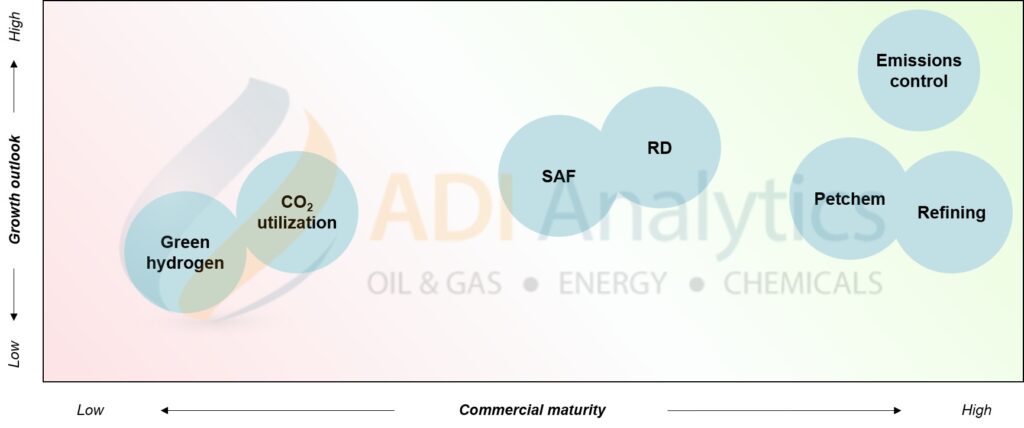
Exhibit 2: Catalyst market segments opportunity map.
At the same time, competition is also becoming increasingly global. Chinese suppliers such as Sinopec, Sinocompound, and Zhejiang Micro General New Catalytic Materials are expanding their capabilities in advanced catalyst technologies and precious-metal systems, allowing them to compete beyond low-cost commodity products in higher-specification refining, petrochemical, specialty chemical, and energy transition applications.
Catalyst suppliers, therefore, need to differentiate through more than catalyst performance alone. Integrated technology offerings, digital optimization platforms, catalyst lifecycle services, and regeneration and recovery capabilities are becoming increasingly important sources of value creation. Growth is likely to accrue to suppliers that participate across more stages of the customer lifecycle while building positions in faster-growing markets such as renewable fuels and emissions control.
– Edmund Lam and Uday Turaga
About ADI Analytics
ADI is a prestigious, boutique consulting firm specializing in oil and gas, energy, and chemicals since 2009. We bring deep expertise in a broad range of markets where we support Fortune 500, mid-sized and early-stage companies, and investors with consulting services, research reports, and data and analytics, with the goal of delivering actionable outcomes to help our clients achieve tangible results.
We also host the ADI Forum that brings c-suite executives together for meaningful dialogue and strategic insights across the oil & gas, energy transition, and chemicals value chains. Learn more about the ADI Forum.
Subscribe to our newsletter or contact us to learn more.