The engineered pump industry is seeing growing demand from AI infrastructure, LNG expansion, critical minerals development, and industrial modernization. At the same time, aftermarket services and digital monitoring are becoming larger contributors to industry profit pools. These trends are changing industry growth drivers and profit pools (see Exhibit 1).
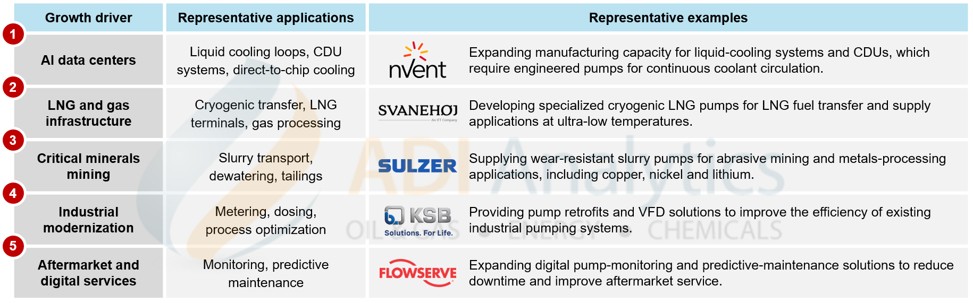
Exhibit 1. Growth drivers in the engineered pump segment.
At ADI, we have worked with pump manufacturers, investors, and industrial suppliers on market sizing, voice-of-customer research, growth strategy, and transaction support across centrifugal pumps, cryogenic pumps, metering and dosing pumps, slurry pumps, sealless pumps, and related flow-control equipment. Several themes have emerged consistently from this work and are increasingly visible across the broader engineered pump market.
1. Data centers are creating a new growth market
Artificial intelligence and high-density computing are accelerating the adoption of liquid cooling systems across hyperscale and colocation data centers. These architectures depend on engineered pumps to circulate cooling fluids through facility loops, cooling distribution units, and direct-to-chip systems. As rack power densities rise, cooling systems are becoming larger, more complex, and more important to facility reliability.
Several pump manufacturers have identified data centers as one of the fastest-growing applications for engineered pumping equipment. nVent has expanded manufacturing capacity serving liquid-cooling infrastructure roughly eightfold since 2023 and estimates approximately $1 million of pump-related opportunity per MW of deployed data center capacity. Gorman-Rupp and Teikoku are deploying leak-free canned motor pumps to support facility cooling loops where fluid containment and operational reliability are critical.
These developments align with broader changes occurring across data center thermal management. As we discussed in Cooling fluids are constraining AI data centers, operators increasingly evaluate cooling ecosystems, creating opportunities for suppliers with data center and thermal management expertise.
2. Energy markets are shifting demand toward gas infrastructure
Pump demand across the energy sector is becoming increasingly concentrated in natural gas infrastructure, LNG, and related midstream assets. Pipeline expansion, gas gathering systems, LNG export facilities, storage terminals, and power infrastructure all require specialized pumping systems capable of operating under demanding conditions.
Several suppliers reported strong exposure to these investments. Flowserve cited approximately 70% growth in midstream revenues tied to natural gas infrastructure and power demand. In LNG, companies such as Svanehøj and Vanzetti are supplying cryogenic pumps for liquefaction facilities, regasification terminals, and marine LNG applications, where reliability requirements support premium equipment pricing.
Operators increasingly evaluate pumping systems based on uptime, maintenance requirements, energy consumption, and lifecycle economics. The same themes apply across LNG transfer, gas processing, storage, and export facilities, which we explored in How LNG growth is increasing focus on transfer operations.
3. Mining continues to reward durability and lifecycle performance
Mining remains one of the most demanding applications for engineered pumps. Slurry transport, dewatering, tailings management, and mineral processing expose equipment to abrasive fluids, high solids content, and severe operating conditions. These environments create ongoing demand for heavy-duty pumps and replacement components.
The business model in mining increasingly revolves around installed-base monetization. Suppliers such as KSB and Weir continue to invest in wear-resistant materials, advanced metallurgy, and additive manufacturing technologies to extend component life in slurry applications. Demand for copper, lithium, and other critical minerals is supporting both new equipment sales and recurring aftermarket revenue tied to highly abrasive operating environments.
Manufacturers seeking growth in mining increasingly need detailed visibility into replacement cycles, maintenance spending, and customer purchasing criteria. Voice-of-customer research and installed-base analysis help identify demand drivers that are often difficult to capture through aggregate market forecasts.
4. Chemicals are prioritizing efficiency and modernization
Capital spending in chemicals and petrochemicals remains uneven across regions and end markets. Even so, facility operators continue to invest in reliability improvements, efficiency upgrades, and emissions reduction initiatives. These projects often involve replacing older pumping systems with higher-efficiency alternatives.
Energy consumption typically represents the largest component of pump lifecycle cost. Suppliers are responding through variable frequency drives, hydraulic redesigns, and improved controls. Industry estimates indicate system efficiencies can increase from approximately 46% to 67% through modernization initiatives. In metering and dosing applications, Watson-Marlow’s Qdos platform has gained adoption in water treatment and chemical processing where precision and operator safety directly affect plant performance.
5. Aftermarket and digital services are becoming the competitive battleground
Aftermarket revenue is becoming the primary profit pool for many pump manufacturers. Installed-base scale, service coverage, and maintenance capabilities increasingly influence competitive positioning and long-term growth.
The largest OEMs are investing heavily in digital monitoring platforms. Flowserve’s RedRaven platform has been deployed at more than 2,500 sites, KSB Guard monitors more than 6,000 pumps, and Xylem’s Vue platform continues to expand through broader service agreements. In oil and gas applications, predictive maintenance programs have improved production uptime by 27% and maintenance KPIs by 26%.
The economics increasingly favor suppliers with large installed bases. Aftermarket accounts for approximately 71% of Flowserve’s pumps revenue, and KSB has reported that more than 80% of pumps segment EBIT is generated by aftermarket activities. The same dynamics are visible across industrial equipment markets more broadly, as discussed in Unlocking growth: The industrial aftermarket as a strategic engine. As service revenue becomes a larger share of industry profit pools, aftermarket participation increasingly shapes valuation, acquisition activity, growth strategy, and competitive positioning.
Strategic implications
The engineered pump market is increasingly shaped by four forces: liquid-cooled data centers, gas and LNG infrastructure investment, critical minerals development, and digital asset management. These trends favor suppliers that combine application expertise, engineered products, digital capabilities, and large installed bases.
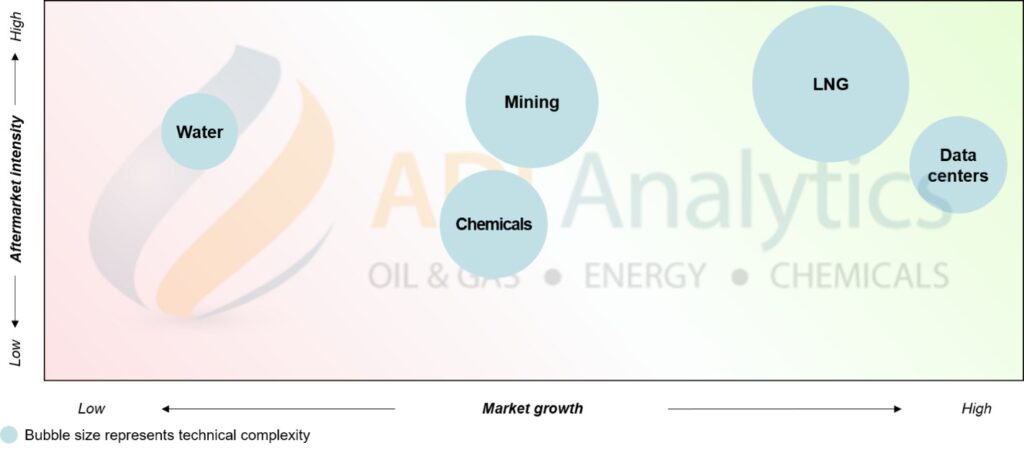
Exhibit 2. Engineered pump opportunity map.
For operators, pump selection is increasingly a reliability and lifecycle decision. For manufacturers, growth increasingly depends on service contracts, monitoring platforms, and installed-base expansion. For investors, the most attractive assets combine aftermarket scale, differentiated technology, defensible positions in energy and process industries, and exposure to long-term growth markets such as data centers, LNG, mining, and industrial infrastructure.
– Edmund Lam and Uday Turaga
About ADI Analytics
ADI is a prestigious, boutique consulting firm specializing in oil and gas, energy, and chemicals since 2009. We bring deep expertise in a broad range of markets where we support Fortune 500, mid-sized and early-stage companies, and investors with consulting services, research reports, and data and analytics, with the goal of delivering actionable outcomes to help our clients achieve tangible results.
We also host the ADI Forum that brings c-suite executives together for meaningful dialogue and strategic insights across the oil & gas, energy transition, and chemicals value chains. Learn more about the ADI Forum.
Subscribe to our newsletter or contact us to learn more.