The European Union’s ReFuelEU Aviation regulation required sustainable aviation fuel (SAF) to account for at least 2% of aviation fuel supplied at EU airports in 2025. The target was exceeded, with SAF accounting for 2.79% of total aviation fuel supplied during the year. However, almost all of this SAF came from bio-based pathways, such as hydroprocessed esters and fatty acids (HEFA), and relied heavily on Chinese supply chains.
The next milestone is significantly more ambitious. The overall SAF blending requirement will rise to 6% by 2030, requiring substantially greater volumes than are available today. Within this broader target is a dedicated sub-mandate for synthetic aviation fuel (eSAF), which must account for an average of 1.2% of aviation fuel supplied in the EU over 2030–2031. The UK’s separate power-to-liquid (PtL) obligation will also rise to 0.5% in 2030.
The challenge is particularly acute for eSAF. While bio-based SAF production continues to expand, eSAF remains considerably more expensive, and most announced projects are still in the early stages of development. Based on the eSAF projects tracked in ADI’s SAF database, ADI expects available global eSAF supply by 2030 to meet only ~33% of the anticipated demand under the EU and UK eSAF mandates (see Exhibit 1).
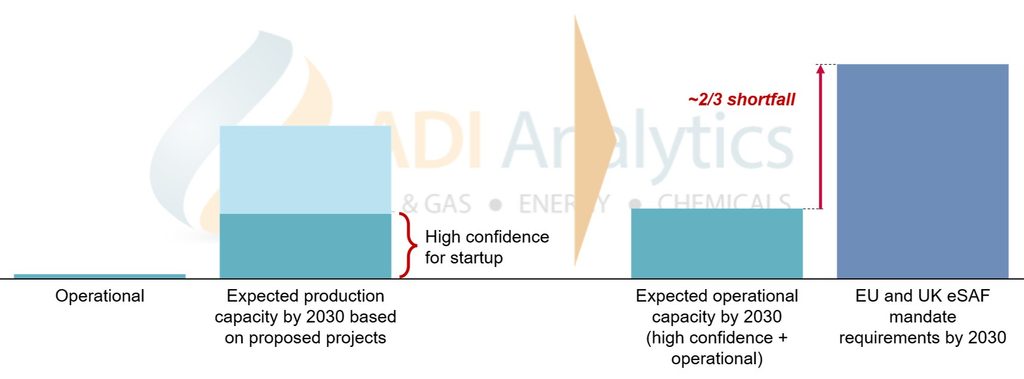
Exhibit 1. Expected global eSAF capacity by 2030 vs. EU and UK mandate requirements (Million gallons per year).
In the ninety-seventh edition of ADI’s biweekly SAF newsletter, SAF Tracker, ADI examines the factors limiting the commercial development of European eSAF projects and what these challenges could mean for Europe’s eSAF market.
Subscribe to SAF Tracker to access the full article and key insights, SAF news highlights, as well as our archives and databases.