The European Union (EU) Methane Regulation is known for its strict methane emissions transparency requirements for foreign oil and gas imports, and has driven methane emissions monitoring and reporting efforts, especially among oil and gas players serving the EU market. Under Article 28 of the EU Methane Regulation, importers are required to demonstrate that fossil fuels produced outside the EU meet monitoring, reporting, and verification (MRV) standards equivalent to the OGMP 2.0 Level 5 standard. Therefore, companies supplying fuels to EU countries are required to measure methane emissions from their operations and have the reported data verified by a third party, such as through MiQ certification.
However, while the requirements were originally set to take effect in January 2027, the EU recently announced plans to postpone the MRV requirements for imported fuels by one year to January 2028. The potential delay comes amid mounting pushback from the oil and gas industry and governments, as the Middle East conflict has disrupted global oil and gas supplies and heightened concerns over European energy security.
Several of our oil and gas clients have asked for our views on the implications of the delay in MRV requirements in the EU Methane Regulation.
ADI’s assessment is that the delay would provide suppliers with some relief in complying with the EU Methane Regulation’s MRV requirements. In mid-2026, energy ministers from the U.S., Nigeria, Algeria and Qatar sent a joint open letter to the European Commission highlighting the challenges of meeting the MRV requirements, as most natural gas and oil imports to Europe could potentially be considered non-compliant given the regulation’s tight timeline. The additional year would give exporters more time to establish the necessary methane monitoring and verification systems and prepare for the revised requirements.
On top of that, the delay could support LNG flows into Europe in the near term. European buyers have reportedly been hesitant to sign deals with U.S. suppliers such as Venture Global due to concerns over the EU Methane Regulation’s MRV requirements. Extending the compliance timeline could reduce the risks associated with signing new LNG supply contracts while allowing companies to secure essential winter supplies for 2027 without facing immediate compliance requirements. This could help support LNG trade flows into Europe, particularly during periods of tighter global gas supply.
Where this leaves the market
In June 2025, ADI Analytics published a blog highlighting the potential relaxation of the EU Methane Regulation as European policymakers sought to balance methane reduction objectives with the need to ensure continued gas supplies across the European countries. This balancing act is now becoming more apparent with the proposed one-year delay to the importer MRV requirements.
However, based on our benchmarking work and experience supporting oil and gas clients on methane emissions, we believe the delay will have minimal impact on broader methane emissions efforts among oil and gas operators, similar to our assessment of the rollback of the Waste Emissions Charge (WEC) rule in the U.S. This is because the proposed changes primarily affect the timing of the MRV requirements, while the mandates for methane intensity reporting and maximum methane intensity thresholds for imported fuels under the EU Methane Regulation remain unchanged, with the respective requirements set to take effect in August 2028 and August 2030. Although the European Commission has yet to finalise the specific quantitative methane intensity thresholds, ADI’s benchmarking of over 40 oil and gas operators globally suggests that many operators currently have methane intensity levels above the average observed among European oil and gas companies, as shown in Exhibit 1. (contact us to learn more).
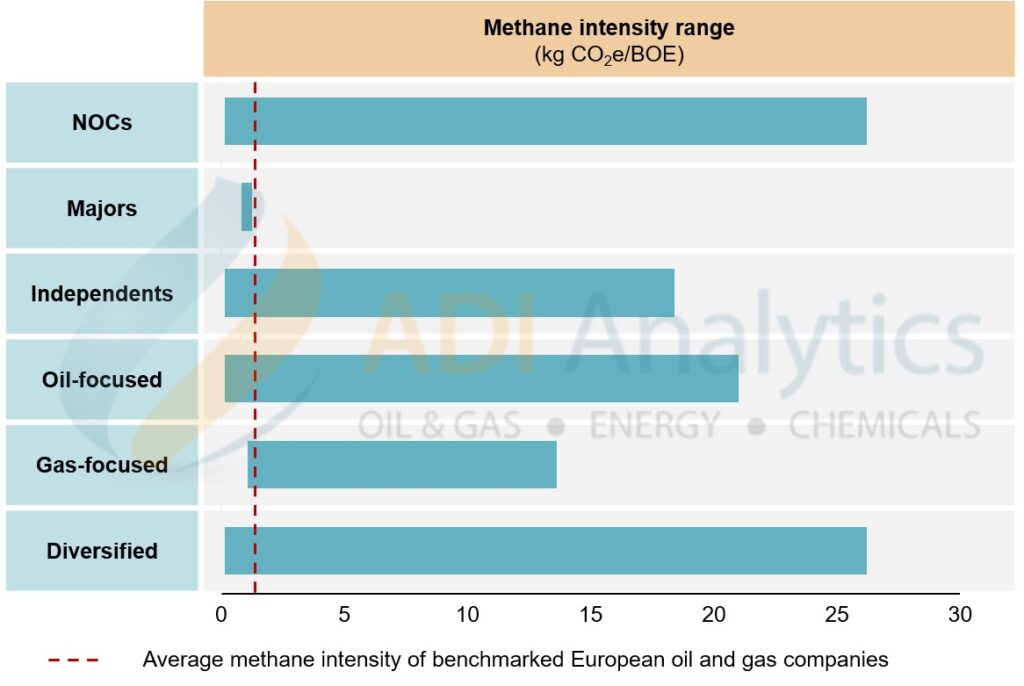
Exhibit 1: Methane intensity ranges by type of oil and gas operator, kg CO2e per barrel of oil equivalent (kg CO2e/BOE). (Source: ADI Analytics)
Besides, growing demand for low methane intensity gas and greater methane transparency in Asian markets is expected to drive continued methane emissions reduction efforts among oil and gas suppliers. LNG buyers in Japan and South Korea are increasingly prioritising methane transparency, prompting suppliers to improve methane management and emissions reduction efforts to continue serving these markets. For example, Cheniere Energy has accelerated the adoption of AI-enabled predictive maintenance and digital twins to meet evolving transparency requirements and has established methane intensity targets for its liquefaction facilities. Major oil and gas companies have also increased year-on-year investment in methane monitoring and detection technologies to strengthen their methane emissions management in order to secure access to the European market in the future.
Taken together, the proposed delay of the EU Methane Regulation’s MRV requirements represents more of a pragmatic adjustment to prioritise energy security in the near term than a reversal of the EU’s broader methane reduction ambitions. While the additional year would give LNG suppliers more time to prepare and support near-term LNG flows into Europe, the mandates for methane intensity reporting and methane intensity limits under the EU Methane Regulation remain in place for fuel imports into the EU. Meanwhile, growing demand for low-methane intensity gas and increasing methane transparency requirements across Asian markets will continue to drive investment in MRV and methane emissions reduction technologies across the oil and gas sector. As a result, methane transparency and emissions performance will remain key considerations for LNG exporters and other fuel suppliers seeking to maintain and expand access to global markets.
– Edmund Lam
About ADI Analytics
ADI is a prestigious, boutique consulting firm specializing in oil and gas, energy, and chemicals since 2009. We bring deep expertise in a broad range of markets where we support Fortune 500, mid-sized and early-stage companies, and investors with consulting services, research reports, and data and analytics, with the goal of delivering actionable outcomes to help our clients achieve tangible results.
We also host the ADI Forum that brings c-suite executives together for meaningful dialogue and strategic insights across the oil & gas, energy transition, and chemicals value chains. Learn more about the ADI Forum.
Subscribe to our newsletter or contact us to learn more.