HF Sinclair plans to separate its Lubricants & Specialties business, retire its 15,600-barrel-per-day Ontario base oil refinery, and replace internal production with long-term supply agreements. Similar portfolio activity is visible across the industry: BP sold a controlling interest in Castrol, Saudi Aramco acquired Valvoline’s global products business, and private-equity-backed distributors continue to add local businesses.
Globally, six themes define the current market: (1) tighter and increasingly regional specifications are increasing formulation complexity; (2) supply disruptions and new additive capacity are changing sourcing strategies; (3) electric vehicles are changing fluid requirements, primarily in passenger cars; (4) industrial and thermal-management applications are adding demand; (5) compliance requires continuing investment; and (6) private equity is consolidating fragmented distribution and service businesses.
1. Specifications are becoming more complex across applications and regions
Lubrizol, Infineum, Afton Chemical, and Chevron Oronite supply more than 85% of global lubricant additives. Additive packages can represent about 60% of raw-material cost for independent blenders.
Requirements for 0W-16 and 0W-8 passenger-car motor oils continue to tighten performance standards around wear protection, volatility, fuel economy, and deposit control. Heavy-duty diesel lubricants face a different set of requirements, including severe duty cycles, emissions-system compatibility, longer drain intervals, and continued demand for more conventional viscosity grades.
Complexity is also becoming more regional as markets such as China and India develop their own specifications and standards. Qualification takes time, testing, and OEM approval. Replacing an approved formulation often requires repeating that process. The result is an industry where formulation expertise, local testing capabilities, regulatory knowledge, OEM relationships, and approval histories influence competitive positioning as much as manufacturing capacity.
ADI’s work in specialty chemicals has shown similar patterns in coatings, additives, and other performance-driven materials markets.
2. Supply security is driving regional capacity and supplier diversification
The United States obtains roughly 40% of its Group III base oil supply from the Persian Gulf and another 40% from South Korea. The Pearl gas-to-liquids facility in Qatar supplied about 30,000 barrels per day of Group III+ base oil before its 2026 shutdown. The disruption led to allocation, repeated price increases, and substitution efforts across blenders, dealers, and aftermarket channels.
Group II can replace some volumes, subject to formulation and OEM approval constraints. At the same time, the emergence of Richful in China is adding a new source of additive supply and increasing competition in a market dominated by four global suppliers. Expansion in China and potential investment in Saudi Arabia would give large national oil companies, global lubricant marketers, and smaller independent blenders additional qualified regional options.
Supplier diversification, approved substitutes, local technical support, and inventory planning now affect customer continuity as directly as product performance.
3. Electric vehicles are reducing passenger-car engine-oil demand and expanding fluid-development work
Electrification is affecting passenger-car engine-oil demand faster than heavy-duty, off-highway, marine, and industrial lubricant demand. Electric vehicles remove the engine-oil change cycle, yet they add requirements for e-transmissions, battery cooling, power electronics, and dielectric performance (see Exhibit 1). These fluids must manage heat, protect copper and polymers, and remain stable around electrical systems.
Electrification is affecting passenger-car engine-oil demand faster than heavy-duty, off-highway, marine, and industrial lubricant demand. Electric vehicles remove the engine-oil change cycle, yet they add requirements for e-transmissions, battery cooling, power electronics, and dielectric performance (see Exhibit 1). These fluids must manage heat, protect copper and polymers, and remain stable around electrical systems.
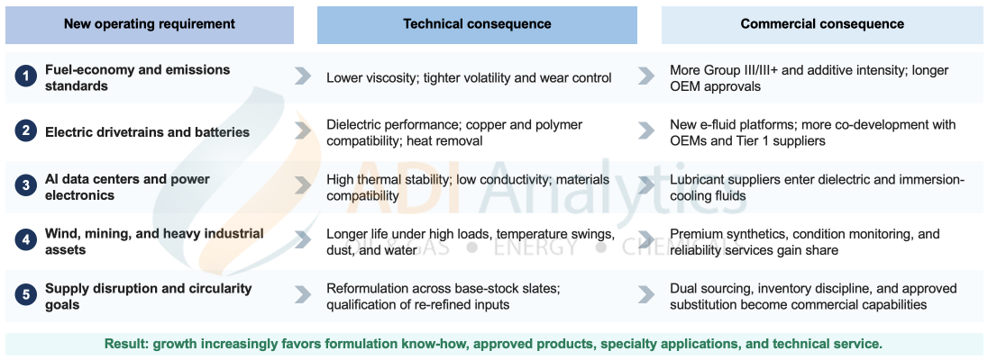
Exhibit 1. Higher operating demands are increasing formulation complexity and qualification barriers.
4. Industrial equipment and data centers are adding specialty-fluid demand
Wind turbines, mining equipment, power systems, and data centers place different demands on lubricants and thermal fluids. High loads, long service intervals, dust, water, and temperature swings support premium synthetics and condition-monitoring services in industrial equipment.
AI servers are pushing rack densities above 50 kW, with some deployments exceeding 100 kW, increasing interest in dielectric fluids for direct liquid and immersion cooling. ADI has examined these links through its work on engineered pumps and industrial reliability and cooling fluids for AI data centers.
5. Compliance is becoming a larger and more permanent cost of participation
Lubricant companies must invest continuously to meet OEM requirements, clean-air and fuel-quality regulations, chemical-registration rules, and limits on formulation components. Used-oil collection and higher-quality re-refining add another layer of testing, traceability, and qualification as customers seek circular inputs without giving up performance.
These requirements increase spending on product stewardship, reformulation, documentation, and approvals. Companies that can spread those investments across larger portfolios and help customers navigate changing requirements gain an advantage over smaller competitors.
6. Private equity is building scale in distribution and technical services
The middle market remains fragmented across distributors, specialty blenders, and service providers. RelaDyne has completed more than 50 acquisitions since its formation, using local density to improve procurement, logistics, and customer coverage. PetroChoice followed a similar strategy, acquiring smaller distributors while building its own brand and maintaining major supplier relationships. Its acquisition by a Brazilian company also shows that consolidation is becoming more cross-border. Stonepeak’s investment in Castrol brings infrastructure capital into a branded lubricant platform.
These strategies depend on recurring demand, route density, customer retention, and opportunities to add fluid management, condition monitoring, and reliability services. ADI supports investors across commercial and technical due diligence, market assessment, value creation, and exit planning in energy, chemicals, and industrials.
Lubricants remain an attractive and profitable business as automotive engine-oil demand matures in many developed markets. Investment is spreading across the capabilities needed to serve more demanding applications and regional requirements. Formulation expertise, OEM approvals, resilient sourcing, regulatory capabilities, thermal-management chemistry, industrial service, customer relationships, and distribution scale will determine which companies capture the next pools of growth.
– Uday Turaga and Ramnath Kuthoore
About ADI Analytics
ADI is a prestigious, boutique consulting firm specializing in oil and gas, energy, and chemicals since 2009. We bring deep expertise in a broad range of markets where we support Fortune 500, mid-sized and early-stage companies, and investors with consulting services, research reports, and data and analytics, with the goal of delivering actionable outcomes to help our clients achieve tangible results.
We also host the ADI Forum that brings c-suite executives together for meaningful dialogue and strategic insights across the oil & gas, energy transition, and chemicals value chains. Learn more about the ADI Forum.
Subscribe to our newsletter or contact us to learn more.