The U.S. government is spending real money on critical minerals right now. On August 7, 2026, the Department of Energy launched a $100 million program to train more mining engineers. It’s one of several moves happening at the same time, alongside price guarantees, tariffs, and new sourcing rules. None of it changes the basic picture: China controls critical minerals because it built one connected system, not because it has better deposits in the ground. Five gaps explain why the West hasn’t closed that lead.
1. China’s mining industry moves faster because the government owns and finances it
China’s mining companies aren’t just competing for profit. The government holds a stake in 94 of China’s 100 largest mining companies and lends to them at roughly half the interest cost of their global competitors, because state backing makes them cheaper to finance. CMOC bought a gold mine in Ecuador for $421 million in June 2025 and signed a $1.7 billion deal to build it out just ten months later, a timeline that would likely still be stuck in permitting for a Western company.
That speed also lets Chinese companies capture the processing step when a country tries to keep more value at home. When Indonesia banned raw nickel ore exports in 2020, Chinese companies responded with about $30 billion in investment, building the country’s smelter count from about 3 to about 49, and now hold roughly 61% of that capacity directly, closer to 75% once indirect ownership is traced through. Zimbabwe’s ban on raw lithium exports played out the same way: the two companies that already had processing plants on the ground, Huayou and Sinomine, simply expanded to absorb the material the ban was meant to keep local, ending up with full ownership of one plant and 74% of the other.
Chinese companies’ reach extends well beyond mining. Stakes in mines abroad grew from about 40 in 2000 to about 1,250 by 2022 (see Exhibit 1), with copper as the single biggest commodity across those assets, not just the battery metals most people associate with this buildout. CATL, the world’s largest battery maker, has made over 150 direct investments touching nearly 9,900 companies, taken a $1 billion stake in a data center operator, and built its own $4.4 billion mining arm. More than half of the 60 minerals on the U.S. critical minerals list are recovered as byproducts of mining something else, like aluminum, copper, or nickel. So a company with this much reach across the sector controls supply of those byproduct minerals too, without needing to mine them directly.
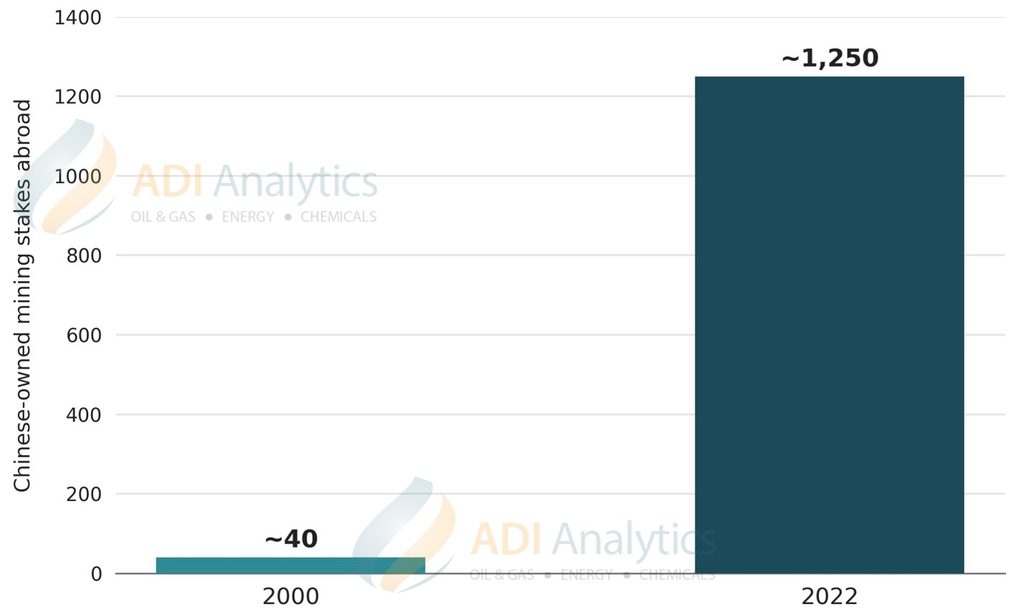
Exhibit 1. Mines with equity owned by Chinese companies outside the country.
The rest of this article is available to all ADI Plus subscribers.
Log in or subscribe to unlock ADI Plus content >>
Have questions? We're happy to help.
About ADI Analytics
ADI is a prestigious, boutique consulting firm specializing in oil and gas, energy, and chemicals since 2009. We bring deep expertise in a broad range of markets where we support Fortune 500, mid-sized and early-stage companies, and investors with consulting services, research reports, and data and analytics, with the goal of delivering actionable outcomes to help our clients achieve tangible results.
We also host the ADI Forum that brings c-suite executives together for meaningful dialogue and strategic insights across the oil & gas, energy transition, and chemicals value chains. Learn more about the ADI Forum.
Subscribe to our newsletter or contact us to learn more.