Excessive competition in China’s chemical sector has driven steep price cuts, eroded returns, and at times industry wide losses. In response, China introduced the “anti-involution” policy in July 2024 to curb margin crushing price wars and shift the growth model from quantity to quality through stricter standards, financing discipline, and targeted consolidation. The policy seeks to rationalize supply and steer investment toward higher value segments to restore profitability across strategic chains.
Yet, despite these ambitions, oversupply pressures continue to intensify. As highlighted in ADI’s Global Chemicals 2026 outlook, China is adding another 7–8 million tonnes per annum (mtpa) of ethylene capacity and ~6 mtpa of polyethylene (PE). Despite several plant closures, this will still result in more than 4.0 mtpa of net new capacity for ethylene and its derivatives (see Exhibit 1), underscoring the critical gap between policy ambition and the locked-in capacity wave from prior investment cycles.
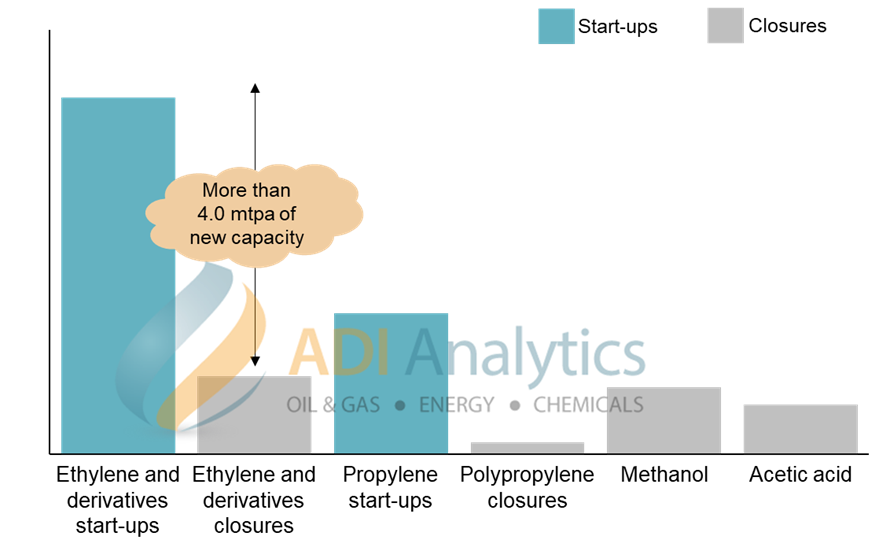
Exhibit 1: Planned plant closure and start-ups in China (Mtpa).
(Source: Company reports, HSBC, ADI Analytics)
What this means for the broader market
China’s domestic chemical market is likely to remain under prolonged margin pressure. Producers are shifting their product mix toward higher value grades, but exports will remain their primary relief valve in the near term. The trend is clear in polypropylene (PP), where China’s imports have fallen sharply from 2020 levels even as exports continue to rise (see Exhibit 2). As Chinese volumes reach wider geographies including North and Southeast Asia, Africa, and Latin America, local producers face tighter pricing power and operating rates will continue to fall. This dynamic is likely to deepen the global chemical industry’s underperformance in the period ahead (as outlined in ADI’s LinkedIn newsletter).
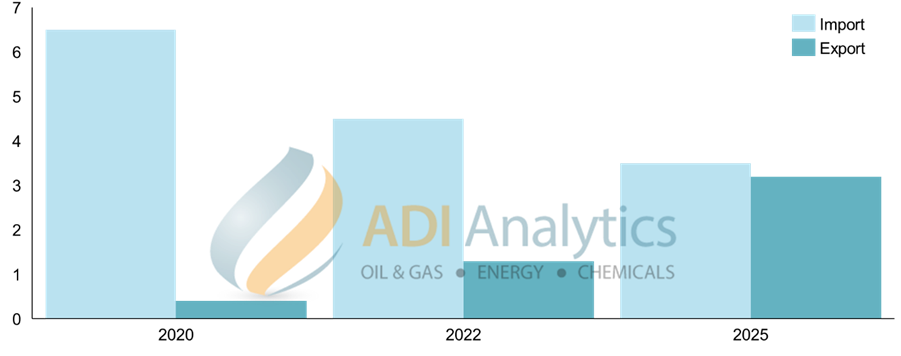
Exhibit 2: China’s PP imports and exports (Mtpa).
(Source: ICIS, ADI Analytics)
Capacity in regions with higher structural and operating costs remains at risk, particularly where assets are older, subscale, or lack integration. Europe is vulnerable to sustained pressure from lower cost Chinese imports, and despite some closures and carbon adjustment policies, many producers continue to face persistent margin erosion. ASEAN’s naphtha-based crackers also face competitive strain from persistent Chinese shipments and weaker regional operating rates. Japan and Korea see ongoing shutdown risks as aging units struggle to compete with China’s more modern integrated complexes, which benefit from scale and lower production costs. These dynamics collectively suppress operating rates and margins, placing high cost and subscale commodity assets at continued risk of closure and intensifying competitive pressure across these regions.
In contrast, regions with cost advantages due to lower feedstock and energy costs may provide cost relief and better resilience. Producers with durable cost advantages, including US and Middle East petrochemical chains with advantaged feedstocks, particularly where ethane and gas are abundant, and scale, are better placed to withstand margin pressure. Specialty chemical segments such as electronic materials, advanced polymers, and circular solutions benefit from stronger pricing power and capital allocation.
What to watch next
Policy and trade actions are likely to intensify, but they tend to redirect surplus rather than eliminate it. Anti-dumping cases and tariffs may shift trade flows between regions, yet global balances will remain largely unchanged as long as new Chinese capacity continues to come online.
Looking ahead, the “anti-involution” policy is expected to focus on moderating output growth and enforcing stricter technical benchmarks, rather than implementing broad, forced shutdowns. This is to curb disorderly expansion while steering the chemical sector toward higher-value specialties and advanced materials.
However, implementation is likely to be gradual. The emphasis will be on renovating and upgrading existing plants, tightening approvals for new projects, and promoting state-owned enterprise (SOE)-led consolidation to impose greater discipline without causing abrupt disruptions. With many previously approved projects still ramping up, the “anti-involution” policy is more likely to slow the pace of new additions than to deliver meaningful cuts to overall capacity, at least in the near to medium term.
Key takeaways
China’s “anti-involution” policy is directionally important for improving industry discipline, yet it cannot quickly counterbalance the substantial wave of petrochemical capacity already built or nearing completion. Over the next 12 to 24 months, China’s rapid commissioning pace will continue to shape global pricing and trade flows, with exports acting as the primary pressure release mechanism while domestic margins remain constrained. The regions that remain most resilient are those with structural cost advantages and higher value product portfolios, whereas high cost and subscale commodity assets face heightened vulnerability amid sustained import pressure.
Key factors to watch in the near to medium term include the trajectory of SOE-led consolidation, enforcement of technical standards that may drive genuine capacity exits, and any future shift from renovation to true shutdowns will determine how soon the market can rebalance. Until such catalysts materialize at scale, structural oversupply is likely to persist and chemical companies with cost-advantaged feedstocks, optimized portfolio mix, and exposure to resilient end-markets are best positioned to outperform amid overcapacity and policy uncertainty.
– Edmund Lam
About ADI Analytics
ADI is a prestigious, boutique consulting firm specializing in oil and gas, energy, and chemicals since 2009. We bring deep expertise in a broad range of markets where we support Fortune 500, mid-sized and early-stage companies, and investors with consulting services, research reports, and data and analytics, with the goal of delivering actionable outcomes to help our clients achieve tangible results.
We also host the ADI Forum that brings c-suite executives together for meaningful dialogue and strategic insights across the oil & gas, energy transition, and chemicals value chains. Learn more about the ADI Forum.
Subscribe to our newsletter or contact us to learn more.