Last week, we attended and presented ADI Analytics‘ perspectives at the U.S. – Middle East & North Africa Natural Gas Midstream Reverse Trade Mission in Houston. Delegates from Egypt, Jordan, and Morocco discussed plans at the event sponsored by the U.S. Trade & Development Association for LNG imports, pipelines, gas storage, gas-to-power projects, and broader natural gas infrastructure development.
The sessions highlighted the scale of investment underway as countries seek to strengthen energy security and diversify supply sources, from Egypt’s LNG import expansion and regional gas import plans to Jordan’s gas infrastructure investments and Morocco’s LNG terminal and Nigeria-Morocco Gas Pipeline ambitions. Recent LNG import projects provide a useful set of precedents for evaluating today’s wave of infrastructure investments.
See Exhibit 1 for a summary of four recurring challenges observed across LNG import markets.
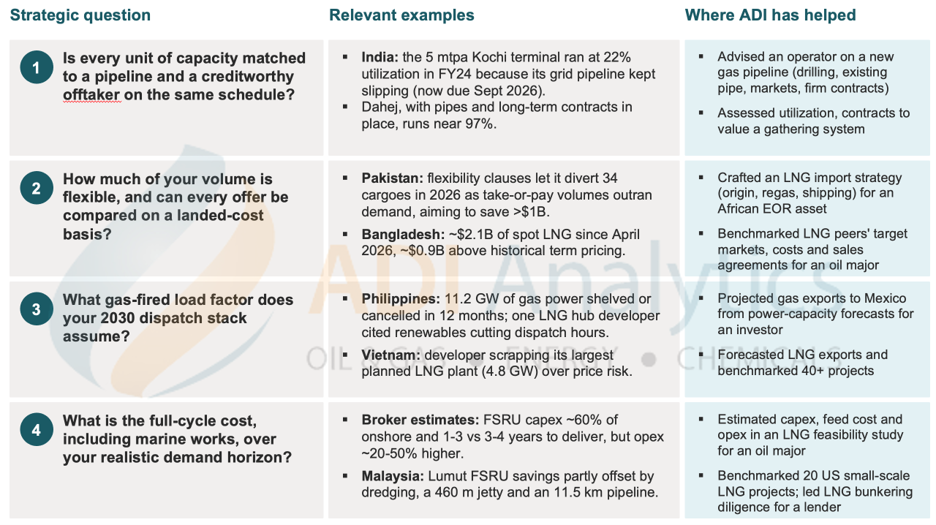
Exhibit 1. Four recurring challenges in LNG import projects.
Infrastructure matters as much as the terminal
LNG import terminals are often the most visible project asset, though utilization is determined by the broader infrastructure that surrounds them. India’s Kochi LNG terminal operated at low utilization for years because pipeline connectivity lagged terminal development, while Dahej in western India benefited from supporting infrastructure and established demand. LNG terminals, pipelines, storage, industrial customers, and power demand are part of the same system and require coordinated development schedules.
ADI’s experience evaluating gas infrastructure, gathering systems, pipeline investments, and market demand highlights that throughput forecasts are best realized when infrastructure development, customer commitments, and demand growth are evaluated together.
Contracting decisions shape project economics
Many LNG import projects are developed during periods of market tightness. Pakistan used contractual flexibility to redirect cargoes when demand softened, while Bangladesh faced significant exposure to spot market purchases during a period of elevated LNG prices.
Procurement strategy, pricing mechanisms, contract tenors, shipping arrangements, and demand uncertainty all influence long-term economics. In ADI’s work supporting LNG import strategies, commercial due diligence, and market assessments, contract terms often prove just as important as commodity prices in determining project outcomes over time.
Demand forecasts deserve continuous scrutiny
Many LNG import investments are ultimately justified by expectations for power generation, industrial growth, or broader gas demand. Several gas-to-power projects in Vietnam and the Philippines experienced delays, cancellations, or lower utilization as market conditions, power-sector economics, and competing technologies evolved.
Project economics often depend on demand assumptions that are revisited over the life of an asset. ADI has supported clients on gas demand forecasts, LNG market outlooks, power market assessments, and infrastructure diligence projects where project economics depended heavily on assumptions about future utilization and customer demand.
Delivery models require full lifecycle evaluation
The discussion around LNG import infrastructure frequently focuses on the choice between FSRUs and onshore terminals. Recent projects show that the comparison extends beyond initial capital costs. Marine works, operating expenses, integration requirements, and long-term utilization can all affect lifecycle economics. Several recent projects highlight both the advantages and limitations of floating solutions depending on local conditions.
The discussion around LNG import infrastructure frequently focuses on the choice between FSRUs and onshore terminals. Recent projects show that the comparison extends beyond initial capital costs. Marine works, operating expenses, integration requirements, and long-term utilization can all affect lifecycle economics. Several recent projects highlight both the advantages and limitations of floating solutions depending on local conditions.
Infrastructure connectivity, contracting strategy, demand assumptions, and lifecycle economics continue to shape project outcomes long after the first cargo arrives.
About ADI Analytics
ADI is a prestigious, boutique consulting firm specializing in oil and gas, energy, and chemicals since 2009. We bring deep expertise in a broad range of markets where we support Fortune 500, mid-sized and early-stage companies, and investors with consulting services, research reports, and data and analytics, with the goal of delivering actionable outcomes to help our clients achieve tangible results.
We also host the ADI Forum that brings c-suite executives together for meaningful dialogue and strategic insights across the oil & gas, energy transition, and chemicals value chains. Learn more about the ADI Forum.
Subscribe to our newsletter or contact us to learn more.