


ADI Analytics has launched a multi-client study on Critical Minerals and the Energy Transition, offering insights on supply-demand trends, country-level risks, investment needs, recycling potential, mining innovations, and policy impacts to help stakeholders navigate the growing role of critical minerals in clean energy technologies.
Critical minerals are metals and non-metals that are considered vital for the economy and whose supply may be disrupted due to various factors such as supply scarcity, geopolitical risk, environmental factors, recycling potential, and trade policy. Rare earth elements (REEs), lithium, copper, cobalt, nickel, and platinum group metals (PGMs) have become critical minerals as they are key enablers of several energy transition-related technologies (Exhibit 1). For example, REEs find application in permanent magnets used in wind turbines and electric vehicle (EV) motors and are also used in high-tech devices for solar panels. Further, metals such as lithium, nickel, and cobalt are vital to battery efficiency and performance while copper is extensively used as a conductor in electricity networks.
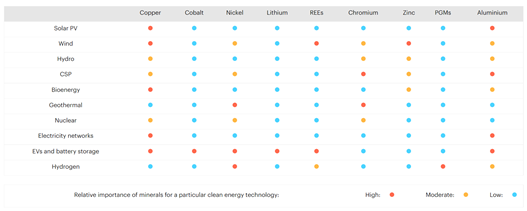
Exhibit 1: Critical mineral needs for clean energy technologies (Source: IEA)
Mineral demand for clean energy technologies is expected to grow significantly over the next two decades aligned with the emission reduction goals adopted by several countries globally. For instance, according to the International Energy Agency (IEA), by 2040, demand for copper and REEs will rise by 40%, nickel and cobalt by 60-70%, and lithium by 90%. However, supply of these critical minerals is under scrutiny as mine production growth of critical minerals since 2016 (Exhibit 2) is not keeping pace with growing demand and can soon lead to scarcities.
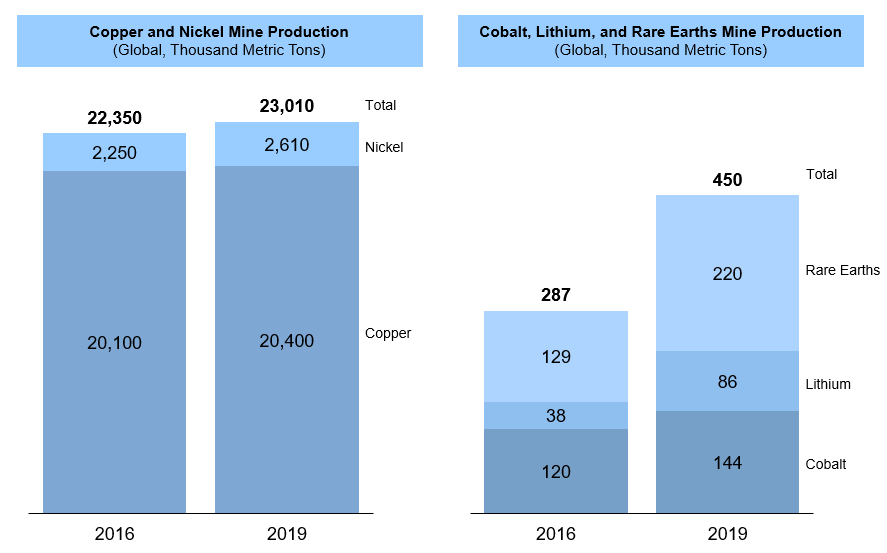
Exhibit 2: Global mine production (Source: The United States Geological Survey, ADI Analytics)
Critical minerals offer a distinct set of challenges which need to be addressed in a timely manner to meet their rapidly growing demand in energy transition scenarios. Some of the factors that will have a high impact on creating conditions conducive to supply growth are listed below:
- Supply security and predictability
Production of critical metals are largely dominated by a few countries which makes their supply challenging amid any disruption. This further brings additional price volatility in the international market. For example, globally, ~70% of cobalt production comes from the Democratic Republic of Congo (DRC), ~60% REEs and ~40% molybdenum comes from China, ~52% each of lithium and platinum group metals (PGM) comes from Australia and South Africa respectively. New innovation that taps into sourcing these minerals from other sources including recycling can help reduce supply volatility concerns.
- Ensure adequate investment via vertical integration
There have been insufficient investments to boost supply of some critical metals. For example, metals such as copper, nickel, lithium, and cobalt are expected to have shortfalls by 2025 amid minimal capital spending today. This has led to interesting partnerships between customers and mine operators.
- International collaboration and supply chain transparency
International policies can be vital to provide reliable information on supply and demand data and supply chain issues as well as promoting a safe and reliable environment for mining investments. Regular market assessments can improve the resilience of supply chains for these critical minerals and prevent any potential supply disruptions in a timely fashion.
- Mining technology innovation
Mining companies should accelerate mineral recovery via R&D efforts to upgrade mining facilities and adopt more customized and sustainable mining pathways. For example, mining companies can use site-specific customized chemicals to maximize metal production from degrading ores. Mining companies should also explore new mines economically and safely to meet regulations which can be promoted by incentivizing higher environmental and social performance.
- Accelerate greenfield mining projects
Mining projects take much longer to move from a planning phase to an actual plant with first production. In the past these have taken almost a decade or even more. This might not be feasible going forward where the demand for critical metals is growing much more rapidly. Timely investment in new projects can prevent market constraints and price volatility.
“The New Frontier: Critical Minerals & the Energy Transition” multi-client study focuses on a comprehensive assessment and outlook for the supply and demand of critical minerals. This 12-week study builds on ADI’s extensive research and deep expertise in metals, minerals, mining, mineral processing, and the energy transition. It is based on in-depth primary and secondary research, along with detailed supply-demand modeling and analytics.
We welcome you to join this study. As a subscriber, you’ll have multiple options to customize your access to the study deliverables. These include a report of approximately 150 pages and a detailed data sheet. You’ll also get a workshop to share findings and discuss underlying assumptions. An annual subscription is available, offering four quarterly updates to the study. Download our study prospectus to learn more.
– Swati Singh and Uday Turaga
About ADI Analytics
ADI is a prestigious, boutique consulting firm specializing in oil and gas, energy, and chemicals since 2009. We bring deep expertise in a broad range of markets where we support Fortune 500, mid-sized and early-stage companies, and investors with consulting services, research reports, and data and analytics, with the goal of delivering actionable outcomes to help our clients achieve tangible results.
We also host the ADI Forum that brings c-suite executives together for meaningful dialogue and strategic insights across the oil & gas, energy transition, and chemicals value chains. Learn more about the ADI Forum.
Subscribe to our newsletter or contact us to learn more.